
Which hand do you wear your wedding ring on? Right or left and why?

The exchange of wedding rings is one of the most emotional moments of a wedding ceremony. But before the time comes, many bridal couples ask themselves a question that seems simple at first glance: Which hand do you actually wear the wedding ring on? Right or left? And why is it different in Germany than in many other countries? We explain the history, theory and everything you need to know about choosing the right hand.
The most important facts at a glance
German tradition; wedding ring on the right
For traditional reasons, also influenced by the church, people in Germany usually wear their wedding ring on the right.
Learn more
The Vena Amoris - the vein of love
It is said that the vein of love flows directly from the heart into the left hand, which is why the wedding ring is worn on the left in some hands as a sign of love.
Learn more
Catholicism and the Reformation
Two different motivations with the same result. Find out what the reason for the ring side is in the two Christian faiths.
Learn more
Wearing a wedding ring on the left or right hand - what applies where?
So many different customs and reasons as to why and how the wedding ring should be worn. Here we have a small overview of the countries where people tend to wear their wedding rings on the left or right.
Learn more
The German tradition: Wedding ring on the right
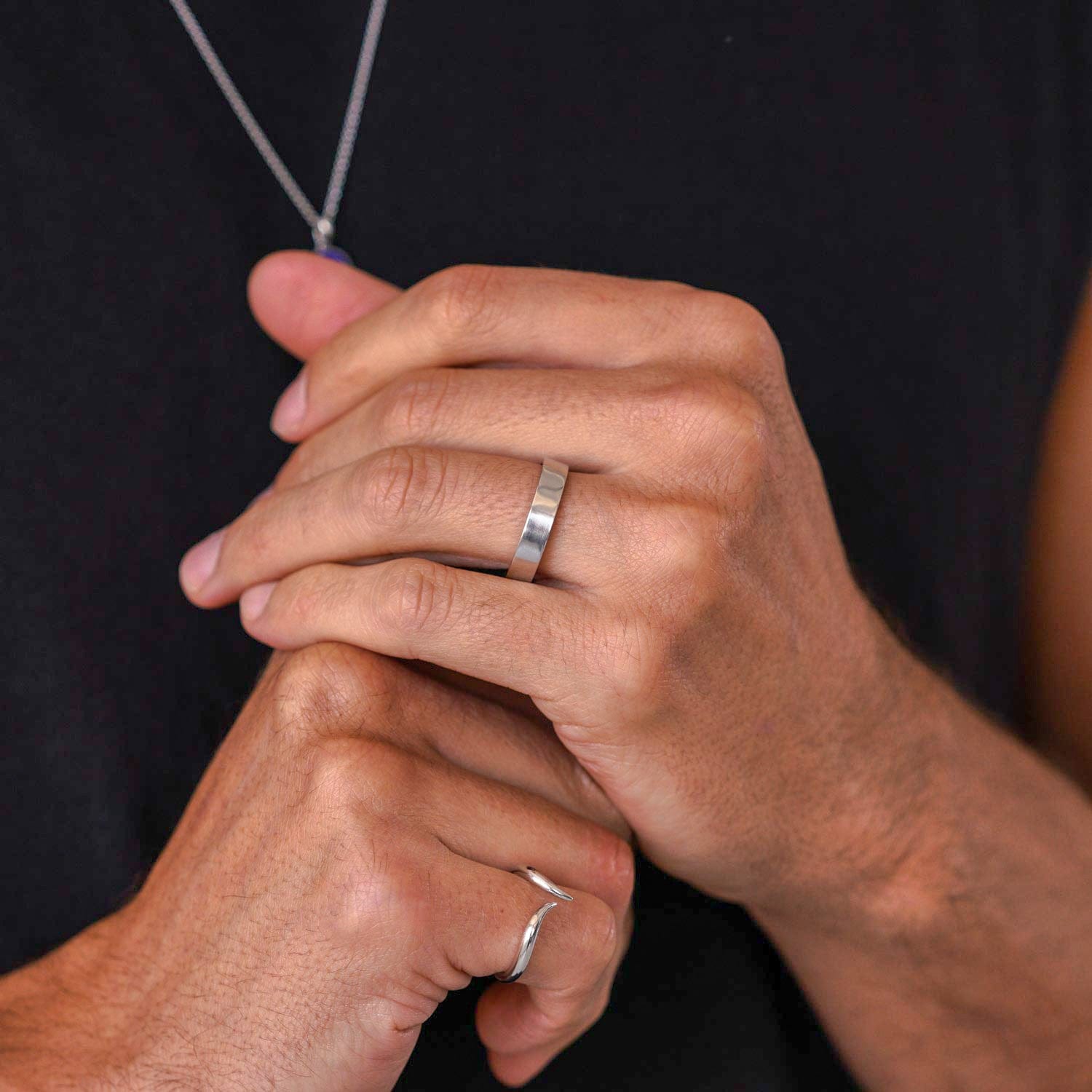
In Germany, the wedding ring is traditionally worn on the right hand. This tradition is widespread and deeply rooted in many regions. The background to this is both cultural and historical. For centuries, the right hand has been regarded as the "hand of fidelity"; in ancient Germanic traditions, an oath or promise was sealed with the right hand. The wedding ring as a symbol of love and commitment therefore fits perfectly on this side.
In German culture, the wedding ring symbolizes the eternal bond between two people. It is a visible sign of love and loyalty that is presented during the wedding ceremony. The shape of the ring is no coincidence: as a circle, it has neither a beginning nor an end and stands for the infinity of love.

The Vena Amoris - the vein of love
Anyone wondering why the wedding ring is worn on the left in other countries will come across one of the most romantic explanations in cultural history. Even in Ancient Egypt, the wedding ring was an important part of the marriage ceremony. Back then, it was worn exclusively on the left hand. The reason for this was the belief in a so-called vein of love, or vena amoris in Latin, which led directly from the heart to the ring finger, making it the "heart finger".
The Germanic tribes, on the other hand, were convinced that the vein of love ran into the ring finger of the right hand, so they wore the ring there. Today we know that such a vein does not exist anatomically, but the tradition that arose from this belief has survived to this day.
Catholicism and the Reformation
In addition to the Vena Amoris, there are other theories as to why the wedding ring is traditionally worn on the right in Germany. In Catholicism, the right side is a "good, auspicious" side; in Exodus 15:6 in the Bible, the right hand is associated with goodness. This also explains why, for example, the bride enters the church on the right of the bride's father. Devout Catholics therefore traditionally wear their wedding ring on their right ring finger.
Another theory is linked to the Reformation, albeit in a geographical way: In southern European, Catholic-influenced countries such as Italy or Spain, it was customary for centuries to wear the wedding ring on the left hand. When Protestants in German-speaking countries wanted to distinguish themselves from the Roman Catholic rite, they deliberately emphasized the right hand as the place of the wedding ring, as a counterpoint to the southern European, Roman-influenced tradition. The protest was therefore not directed against the wearing of the right hand per se, but against the left-wing custom of the Roman Church in other parts of Europe. Over time, faithful Catholics in German-speaking countries also adopted this custom, which is why both Catholics and Protestants in Germany today traditionally wear their wedding rings on the right.
Wearing a wedding ring on the left or right hand - what applies where?

The further north you go, the more likely people are to wear their wedding rings on the right hand. Southern European and English-speaking countries take the opposite approach: here, the wedding ring is traditionally worn on the ring finger of the left hand, even though some of these countries are Catholic. So religion alone does not fully explain the choice of hand.
What happens to the engagement ring and wedding band after the wedding?
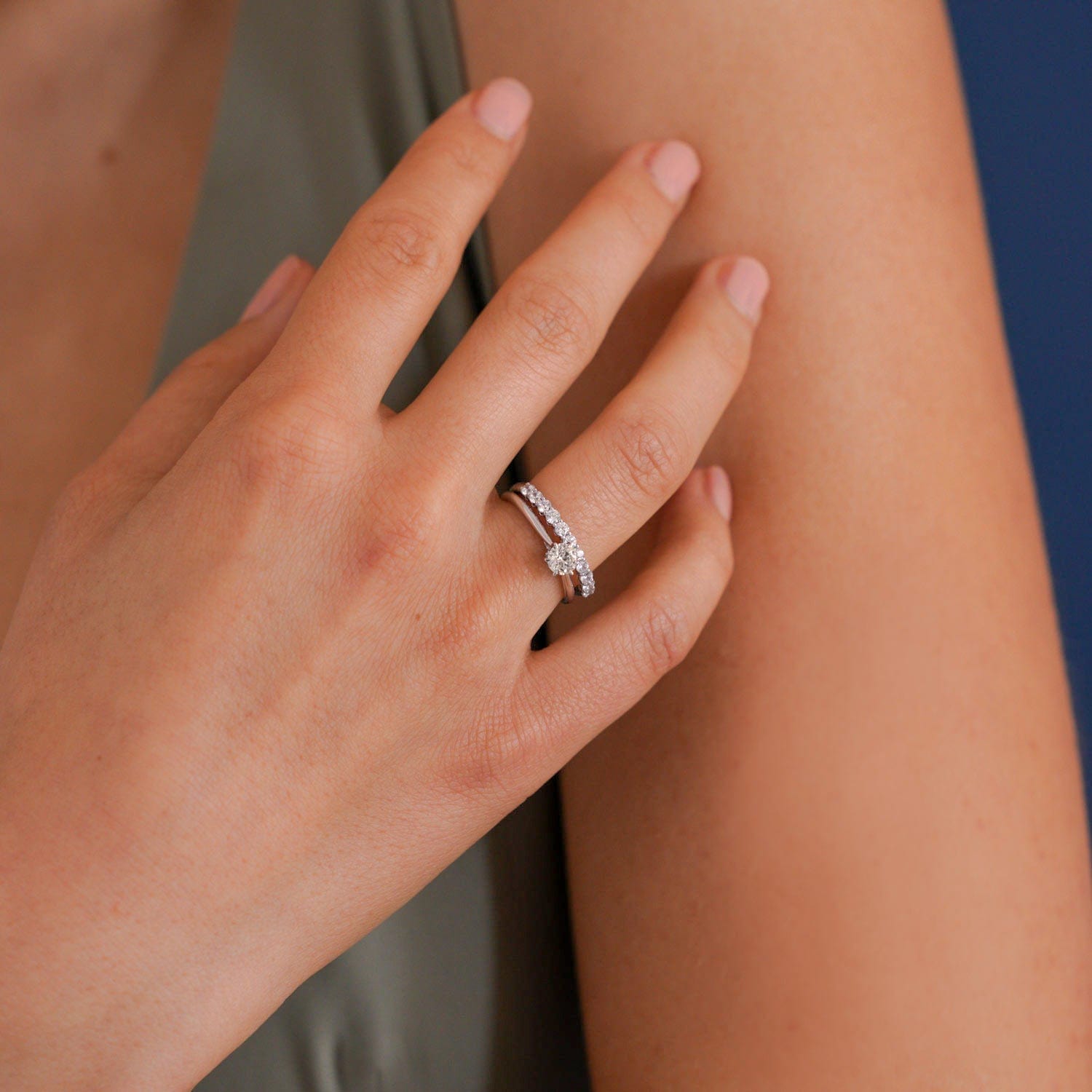
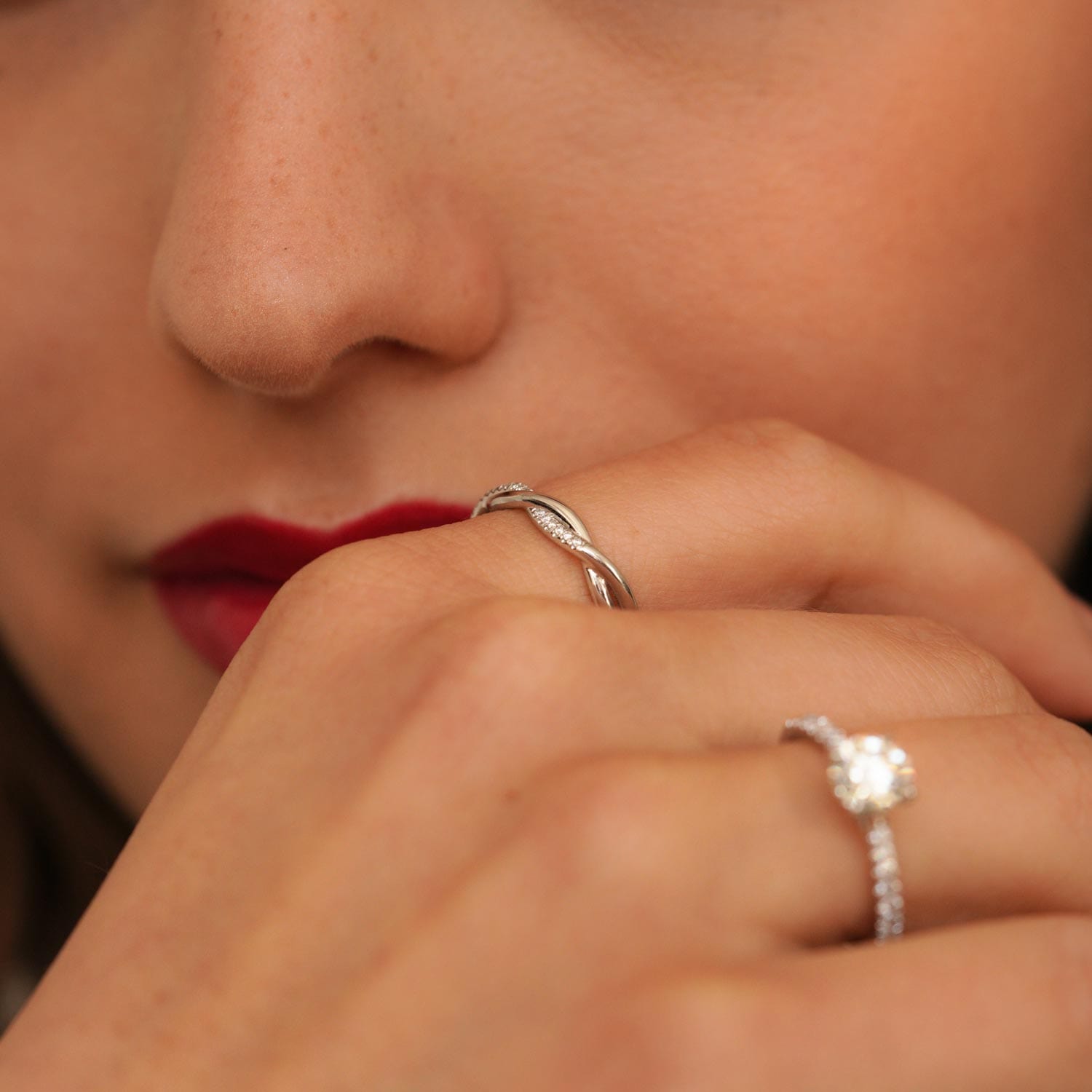
A question that concerns many bridal couples: What happens to the engagement ring as soon as the wedding ring goes on the finger? Married couples in Germany traditionally wear wedding rings on the ring finger of the right hand, while the engagement ring is traditionally worn on the left ring finger.
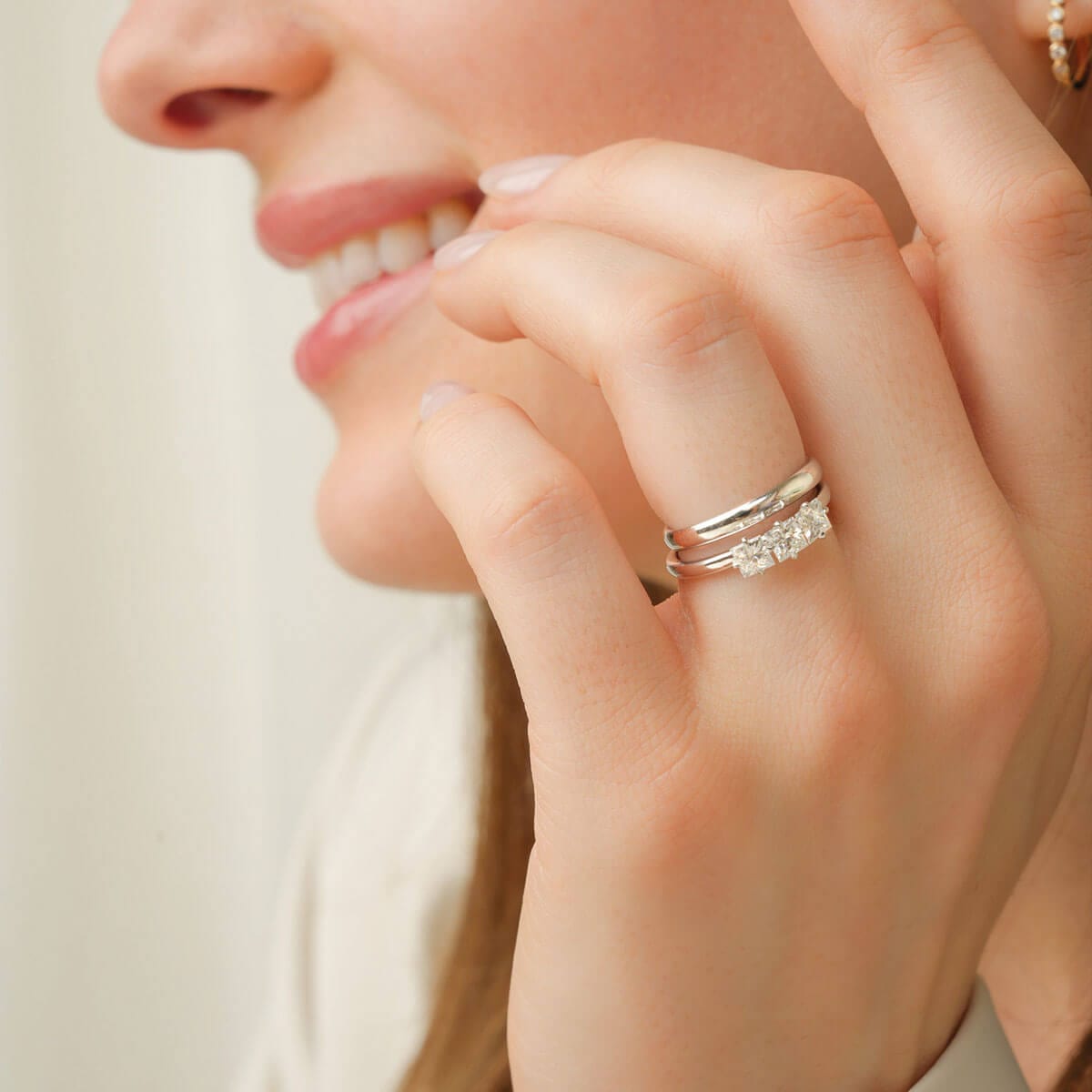
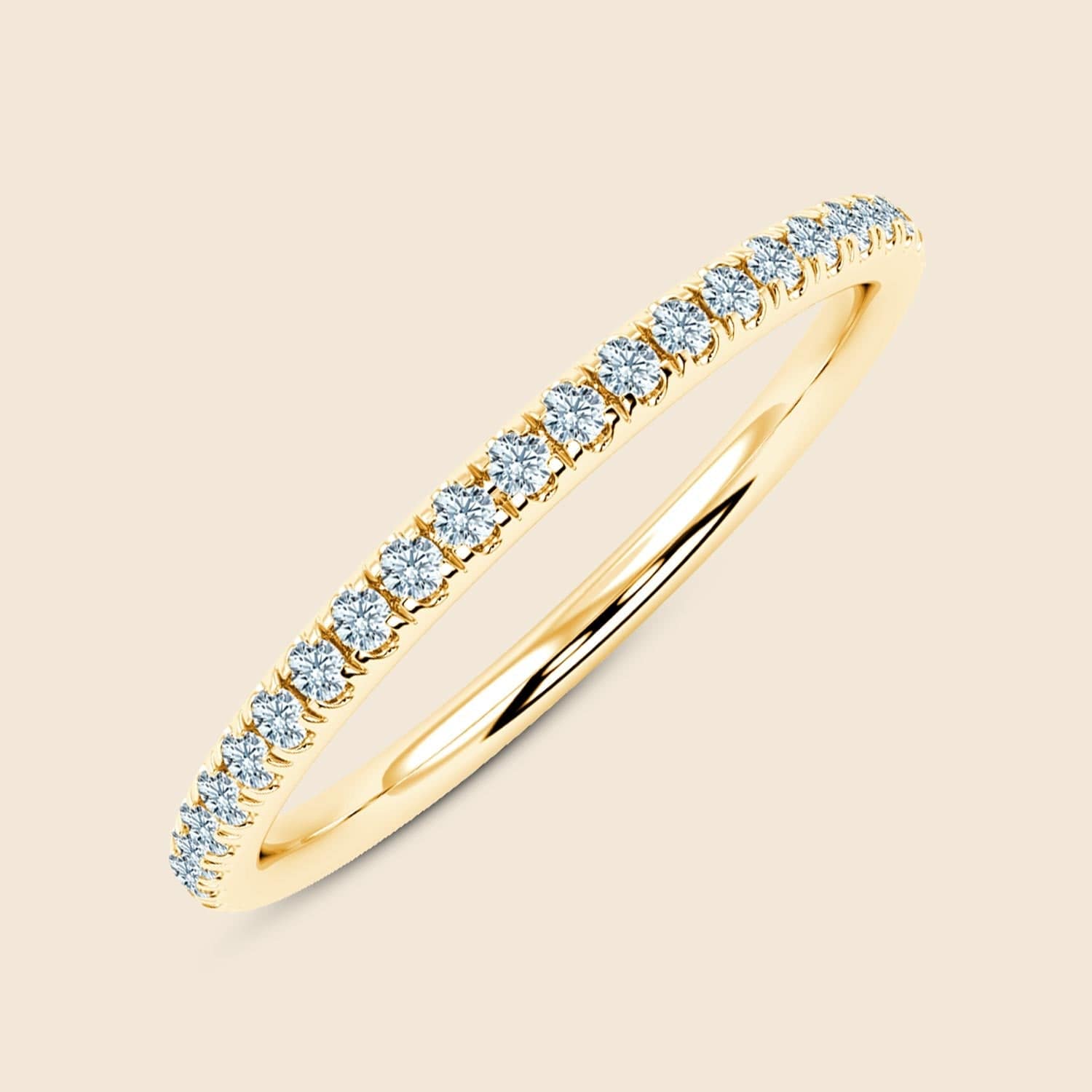
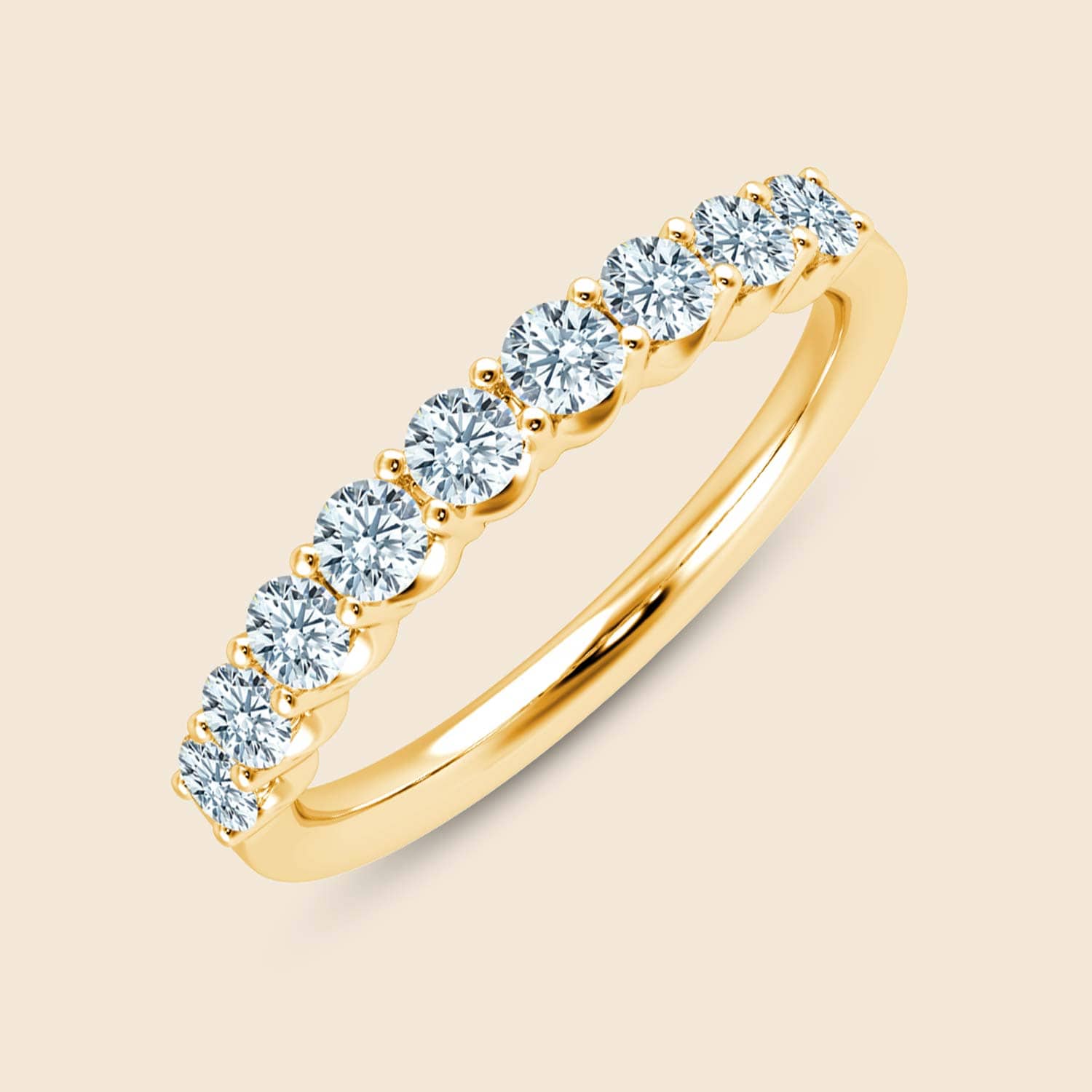
A popular solution is to wear the engagement ring, whether on the left or right hand, as a front ring in front of the wedding ring. Many jewelry manufacturers therefore offer engagement rings that match the wedding rings, for example a classic solitaire ring with a simple diamond-set wedding ring. Both pieces of jewelry are worn together on the ring finger and complement each other to create a harmonious overall look.

Practical considerations: Left-handers and right-handers
Apart from tradition and symbolism, practical considerations also play a role in the choice of hand. For right-handers, it can be practical to wear the wedding ring on the left hand, as the valuable material is better protected from scratches there. If you work a lot with your hands, you should consider together with your jeweler which side is less stressed in everyday life.
The engagement ring is often worn on the left and the wedding ring on the right, but some couples decide to wear it on the left for practical reasons. Others take the wedding ring off completely in everyday life, wear it only on special occasions or wear it on a chain around their neck. This is also completely accepted today.
How is the wedding ring worn in other religions?
In addition to Christian traditions, other religions also have different customs when it comes to wearing the wedding ring. In some Christian traditions, the right hand is seen as a "strong" or "blessed" hand, which is why the custom of wearing the wedding ring there developed. In Islamic cultures, on the other hand, there is often a different understanding of jewelry and marriage, which can vary greatly depending on the country and region, although most Muslim countries also wear the wedding ring on the right hand.




Conclusion: left or right, you decide
In today's world, what you like is increasingly what counts. The strict rules of marriage, which were indispensable in earlier times, are increasingly being discarded. There is no "right" or "wrong". There are also married couples who wear their rings on a necklace - for professional, sporting or reasons that are important to them alone. The most important thing is that couples choose the hand to which they attribute the most positive symbolic and emotional meaning.
Whether right or left: The wedding ring remains what it has always been, a symbol of eternal love and deep connection. And it is best worn where it feels most right for you. The only important thing is to have the ring size measured on the right hand, as the fingers of the right and left hand can differ slightly.
In Germany, the wedding ring is traditionally worn on the right hand. The ring is usually placed on the ring finger, the fourth finger from the hand.
The tradition of wearing the wedding ring on the right hand comes from old European customs. It was believed that the right hand was symbolically stronger for vows and promises, which is why the ring takes on its significance as a sign of marriage.
No, in many countries the wedding ring is worn on the left hand. These include the USA, Great Britain, Canada and Australia, for example. The choice of hand depends heavily on cultural and religious traditions.
In Germany, there is traditionally no difference: both men and women wear the wedding ring on the right hand. However, some couples nowadays opt for the left hand, for example for practical or aesthetic reasons.
Yes, it is always possible to change the wedding ring from the right hand to the left hand or vice versa. Many couples do this for convenience, fashion reasons or to combine their rings with other pieces of jewelry.
Nowadays, the choice of hand no longer has a fixed meaning. What is important is that the ring symbolizes the connection between the partners. Whether right or left, the wedding ring stands for fidelity and partnership.