
The brilliant cut - the cut that ignites the fire of a diamond

Are you looking for a cut that you can't go wrong with? The round brilliant cut is the classic among diamonds and stands for elegance, perfection and beauty. It is the consummate art of creating a sparkling piece of jewelry from a rough diamond. This also makes it the most popular of all cuts.
The most important facts at a glance
Brilliant cut - the classic diamond cut
Get to know the most famous and sparkling diamond cut with its high brilliance.
Learn more
From rough diamond to radiant diamond - structure, proportions and characteristics
Recognize the characteristics and properties of the round brilliant.
Learn more
The difference between old cut and brilliant cut - a development over centuries
What distinguishes this cut from its predecessor, the old cut, and how was the world-famous brilliant cut created?
Learn more
Variants of the brilliant-cut diamond
Discover the different variations of brilliance that have developed over time and in different places.
Learn more
Brilliant cut - the classic diamond cut
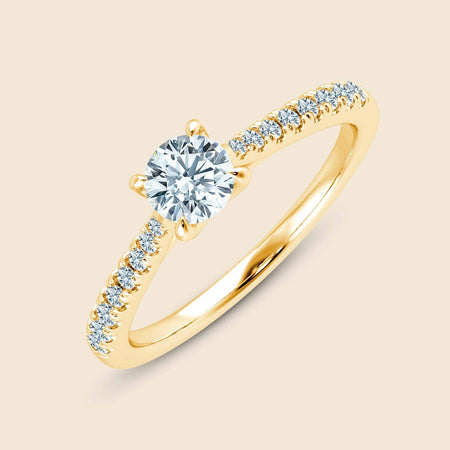
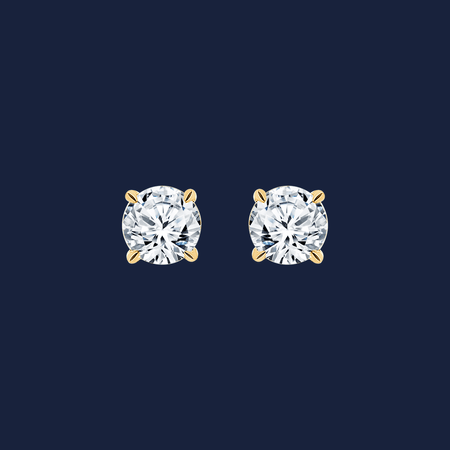
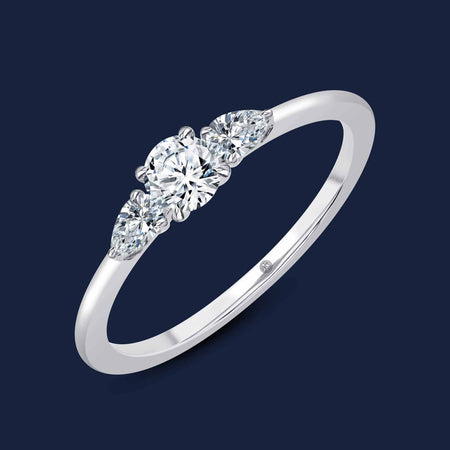
When we think of a diamond, we usually think of a sparkling, round stone and that is exactly what this famous cut is. It is so common that brilliant and diamond are sometimes used as synonyms. It is a symbol of pure aesthetics, flawless craftsmanship and incomparable play of light. It owes its popularity not only to its high brilliance, but also to its versatility. It suits almost every setting and every style. Be it classic, modern or romantic. With its perfectly cut, symmetrically evenly arranged facets, the brilliant cut catches the light from every angle and reflects it back in a fascinating way by reflecting the spectral colors of the rainbow. This creates the unmistakable sparkle and fire of a diamond that makes the gemstone so fascinating. It is the absolute pinnacle of the art of cutting. This makes it ideal for engagement rings, solitaires or luxurious necklaces. However, the brilliant cut is also one of the most complex and costly cuts. This extra effort explains the higher price of such stones.

From rough diamond to radiant diamond - structure, proportions and characteristics
The 57 or 58 facets that a brilliant-cut diamond usually has are particularly characteristic and are in a perfectly calculated ratio to each other. The complete brilliant consists of 32 facets plus a table on the upper side and 24 facets plus a small calette on the underside, which results in a total of 57 facets, or 58. The table is the large, flat surface on the top through which the light penetrates the stone. Below this are the so-called "star facets", which guide the light and, in combination with the crown, the round bar and the pavilion, provide the incomparable brilliance. The round bar forms the transition between the top and bottom and is also the most stable part of the diamond. The pavilion, which is located underneath, reflects the light and throws it back towards the table. There is often a small calette on the underside, which acts like a tiny mirror and optimally directs the light. The unmistakable sparkle that has made the brilliant cut world-famous can only be achieved when all the proportions, angles and facets are perfectly coordinated.
In practice, the fine cut requires the utmost precision. Even during fine grinding and polishing, experienced cutters must ensure that the facets are precisely arranged in order to reflect the light completely. A pavilion that is too deep or a crown that is too flat can allow the light to "escape" and reduce the brilliance. This is why the cut is considered the most important of the four C's in diamond grading - alongside color, clarity and carat weight.
Discover brilliant-cut diamonds




The difference between old cut and brilliant cut - a development over centuries
The emergence of the brilliant cut we know today had a long history. As early as the end of the 15th century, cutters experimented with the first round shapes, and at the end of the 17th century, the first precursors of the modern brilliant cut were created with the so-called Peruzzi cut. These early variants of the diamond cut usually only had 24 facets or were cut in an octagonal shape, which made them less intensely sparkling.
Over time, cutting techniques became increasingly precise until the breakthrough finally came in 1910 and the years that followed. The Belgian mathematician Marcel Tolkowsky developed the so-called Tolkowsky brilliant in 1919. He calculated the exact proportions and angles required for a diamond to optimally reflect light. This form of fine-cut diamond became the basis of the modern brilliant cut, which is still used today in high-quality jewelry.
Previously, the old cut, which was particularly popular in the 19th century, dominated. This already had 58 facets, but without the exact calculation of proportions. The play of light was softer, the sparkle more romantic, but less intense. In contrast, the modern standard brilliant is characterized by a more even distribution of light, a larger table and more precise angles. It appears brighter, clearer and more vibrant, which is the result of centuries of refinement.

Variants of the brilliant-cut diamond
The modern brilliant cut is therefore the result of science, art and experience. A number of proportion measurements and precise geometric calculations have made our diamonds so beautiful today. While earlier cutters worked by feel, today's fine cutting is based on modern measuring instruments and optical analysis. This means that every detail can be controlled, from fine cutting to polishing. Other stones, such as cubic zirconia or emeralds, can now also be brilliant-cut. Due to the long development of the diamond cut in different regions of the world, there are now different variants of the brilliant cut, which differ mainly in their proportions, their light yield and their play of color

Advantages and disadvantages of the brilliant cut
The brilliant cut is considered the most popular and technically sophisticated diamond cut in the world and offers a number of remarkable advantages. With its characteristic facet arrangement of at least 57 or 58 facets, this cut enables optimum light reflection and creates the coveted fire and brilliance that make diamonds so fascinating. The precise geometry ensures that incoming light is almost completely reflected and shines back through the top of the stone, resulting in an extraordinary sparkle. Another advantage lies in the versatility of the brilliant cut, as it works excellently with different diamond qualities and can even conceal minor inclusions with its intense play of light. In addition, this cut is timelessly elegant and suits almost all jewelry styles, from classic to modern, making it the ideal choice for engagement rings and valuable pieces of jewelry.
However, the brilliant cut also has some disadvantages that buyers should bear in mind. The biggest disadvantage is the considerable loss of material during the cutting process, as more than 50 percent of the rough diamond often has to be removed to achieve the perfect round shape and optimal proportions. This makes brilliant-cut diamonds more expensive than other cut shapes in relation to their original weight. In addition, the round shape can offer less surface area than elongated cuts of the same carat weight, which can make the stone appear smaller. Another disadvantage is evident in diamonds with a lower color quality, as the brilliant cut can make differences in color more visible than some other cuts. The high precision required by this cut also means that only experienced cutters can achieve the optimum proportions, and even small deviations from the ideal dimensions can significantly affect the brilliance.
Tip for buying diamonds:
Pay particular attention to the quality of the cut (cut grade), as it has a greater influence on brilliance than color or clarity. A diamond with an excellent cut in a slightly lower color grade often sparkles more impressively than a perfectly white stone with an average cut - and you save money at the same time.
Conclusion
For more than a century, the brilliant cut has stood for perfection, beauty and the radiant fire of a diamond. From the first rough diamond to the sparkling brilliant, the stone undergoes a transformation that combines precision craftsmanship and scientific accuracy. Every single facet plays a role in transforming the light into a spectacular spectacle of spectral colors of the rainbow. The brilliant is and remains the symbol of perfection and a glow that never goes out.
Discover our collections


Frequently asked questions
The brilliant cut is a special round diamond shape with 57 or 58 facets, which is intended to create maximum brilliance and fire.
It is always round and follows fixed proportions, while other cuts such as Princess or Emerald have different shapes and plays of light.
Yes, it is usually more expensive because more raw material is lost during grinding and demand is particularly high.
It is versatile and popular - ideal for engagement rings, earrings, pendants and classic diamond jewelry of all kinds.
It is always round and follows fixed proportions, while other cuts such as Princess or Emerald have different shapes and plays of light.
An excellent brilliant cut shows perfect symmetry, precise facets and brilliant fire without dark spots.