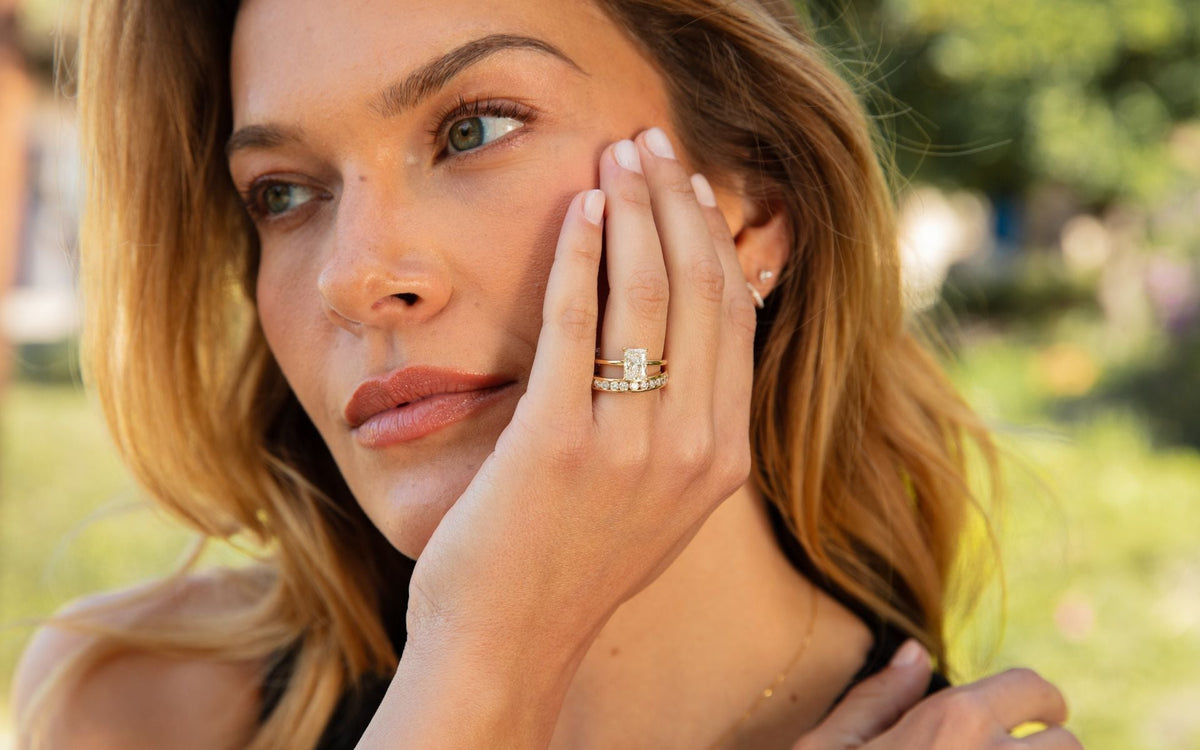

Recessed setting for gemstones - timeless elegance and security for jewelry
The rub-on setting is one of the most elegant and practical types of setting in the goldsmith's art and is characterized by its discreet, almost invisible appearance. In this special type of setting, gemstones are set directly into the piece of jewelry without a separate, visible setting being made. Instead, the gemstone is placed in an indentation on the piece of jewelry and the metal is pressed firmly around the gemstone, holding it securely in place. The rubbed setting is particularly suitable for small diamonds and other cut stones, as it does not cover them too much and is also very comfortable to wear. This setting is often used for jewelry, especially in wedding rings, engagement rings and memoire rings, as the gemstones are particularly well protected and the smooth surface of the metal is ideal for everyday wear.
The most important things at a glance
Features of the rubbed setting for gemstones and diamonds
Find out what characterizes the frame and what distinguishes it from others.
Learn more
The history of the rubbed-in version
Here you can find out how the rubbed setting came about and what special role it plays in the history and design of jewelry.
Learn more
What is the best way to show off the rubbed setting in jewelry?
Learn how best to combine the rubbed frame .
Learn more
Advantages and difficulties of the version
This section highlights both the advantages and the particular challenges of the rubbed-in version.
Learn more
Features of the rubbed setting for gemstones and diamonds
The rub-in setting is characterized by the fact that the gemstone to be set is set directly into the piece of jewelry without using a separate, visible setting for gemstones. This special type of gemstone setting differs fundamentally from other well-known settings. Settings such as the prong setting, in which the diamond is held by so-called prongs made of precious metal, or the bezel setting, in which a continuous metal rim surrounds the round edge of the gemstone.
The characteristic feature of the rub-over setting is that the stones are set in indentations on the piece of jewelry. First, a recess in the shape and size of the gemstone must be made in the piece of jewelry. The gemstone is then inserted into this indentation and the surrounding precious metal is pressed onto it. A special tool, known as a rubbing tool, is used to rub the edge of the metal overlay with even pressure and a great deal of feeling so that the metal lays slightly over the round edge of the stone, thereby holding it in place.
A significant difference to the bezel setting is that only a very narrow edge of precious metal overlaps the stone in the rubbed setting. This is particularly important for small gemstones, as it prevents them from being covered too much and allows their full brilliance to unfold. The crown of the stones protrudes slightly above the surface of the precious metal, allowing a certain amount of light to enter and the gemstone to sparkle despite the compact setting.
The rubbed setting is best suited to round stones, especially brilliant-cut diamonds, as the setting looks particularly harmonious in this cut and the incidence of light is optimally utilized. However, other cuts such as the oval cut or princess cut can also be used with this setting technique if more time is invested. The rubbed setting is suitable for almost all diamond cuts, as it encloses the gemstone and can be made individually for all cuts.
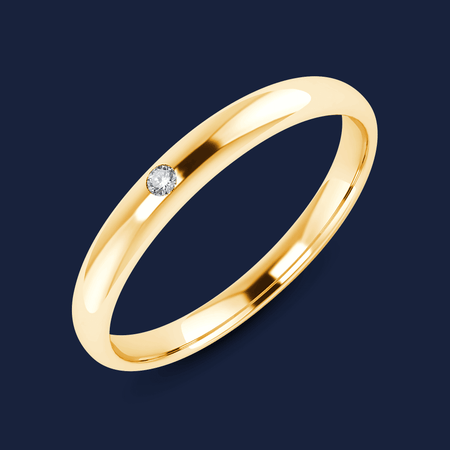
A characteristic feature of this setting is the absolutely smooth surface of the piece of jewelry. Unlike the prong setting, where prongs are used that protrude beyond the ring, or the bezel setting, where a visible metal edge runs around the stone, the gemstone lies flush with the surface in the rubbed setting. This ensures a high level of wearing comfort and prevents the jewelry from catching on clothing or other objects.
In order for this setting technique to be successful, it is necessary to use an elastic metal such as gold or platinum, to select stones that can withstand a certain amount of pressure and to use a metal setting that is precisely worked out to match the size of the stone. The gemstone must never have too much play in the setting, as otherwise it cannot be properly secured and the safety of the stone would be jeopardized.
To summarize:
The rubbed setting (often referred to in English as "flush setting" or "gypsy setting" ) is so called because the precious metal of the piece of jewelry is actually literally rubbed over the edge of the stone with a special tool, the setting hammer or a polishing tool (burnisher), in order to fix it securely. This means that no separate frame (as in bezel setting) or prong is used, but the surrounding material itself.

The history of the rubbed-in version
The rub-on setting is one of the traditional techniques of goldsmithing, the origins of which date back to antiquity. Early cultures recognized the need to securely fasten gemstones in jewelry and developed various types of settings. The bezel setting is one of the oldest settings of all and was already used by the ancient Egyptians and Romans to set precious stones in rings, pendants and other pieces of jewelry.
The rub-on setting evolved as a further development of these early setting techniques and became particularly popular during the Renaissance, when goldsmiths began to look for methods that were both aesthetically pleasing and practical. The rub-in technique made it possible to set gemstones discreetly and securely in jewelry without visible metal structures detracting from the stone's appearance.
Over the centuries, the rub-on setting was continuously refined. This type of setting became particularly important in the 18th and 19th centuries, when the demand for filigree, wearable jewelry increased. Goldsmiths developed specialized tools such as the rubbing tool, with which the metal could be rubbed precisely over the round edge of the gemstone. This technique required the highest level of craftsmanship and an excellent feel for the material, as too much pressure could damage the stone, but too little pressure could not hold it securely.
With the development of modern jewelry designs in the 20th century, the rubbed setting experienced a renaissance. This setting technique became the preferred choice for wedding rings and engagement rings in particular, as it offered a high level of wearing comfort and the gemstones were particularly well protected. The smooth surface of the ring prevented the jewelry from catching on clothing or wearing off, making the rub-on setting ideal for everyday wear.
Today, the rub-on setting is one of the most popular settings in modern jewelry, especially in designs and settings that emphasize simplicity, elegance and functionality. It is often used in memoire rings, where several small diamonds are set along the ring shank, as well as in band rings and other pieces of jewelry that are worn daily. The rub-in technique has been tried and tested over centuries and combines traditional craftsmanship with contemporary design.



What is the best way to show off the rubbed setting in jewelry?
The rubbed setting is particularly suitable for pieces of jewelry that are worn daily and require a high level of wearing comfort. Wedding rings and wedding bands are the classic areas of application for this type of setting, as this is where it can really show off its strengths: The smooth surface of the ring prevents the jewelry from catching on clothing or other objects, and the gemstones are especially protected by the setting. In wedding rings, several small diamonds are often set along the ring band, which gives the ring an elegant, understated look and at the same time provides a subtle sparkle. The rub-on setting is also popular in engagement rings, especially in designs that emphasize simplicity and elegance. For example, the rub-on setting can be used for smaller companion stones along the ring band. This arrangement of gemstones creates a harmonious overall impression and emphasizes the main stone without overloading it.

The rubbed setting can also be used effectively in combination with other types of settings. One popular design, for example, is a ring in which the main stone is set in a prong setting - with three to six prongs holding the stone securely - and smaller companion stones are rubbed in along the ring band. This combination of different settings creates an interesting visual contrast and perfectly emphasizes both the main stone and the accompanying stones.
When it comes to the choice of metal, the rubbed setting harmonizes with white gold and platinum as well as yellow gold and rose gold. Platinum is particularly popular for this type of setting, as it is a very malleable yet stable metal that is ideal for the rub-on technique. White gold offers a similar look at a lower price and is also very suitable. Yellow gold and rose gold give the jewelry a warm, classic character and are ideal for those who prefer a more traditional look.
For all pieces of jewelry with a rub-on setting, it is important that the proportions are right and that the arrangement of the gemstones is harmonious. For rings with several rubbed stones, these should be evenly distributed and create a balanced overall impression. The setting should be designed in such a way that the stones can protrude slightly above the surface of the metal and sparkle without too much metal obscuring the view of the gemstones.

Advantages and difficulties of the version
The rub-on setting is one of the most practical and popular settings for jewelry. The biggest advantage lies in its exceptional security: in the rub-on setting, the stone is set directly into the piece of jewelry and the metal is pressed firmly around the gemstone, which holds the gemstone extremely securely. Unlike the prong setting, which uses prongs that can loosen or break over time, the gemstone in the rub-in setting is completely enclosed by the metal and protected from impact and damage. These gemstones are particularly protected from external influences and are therefore ideal for pieces of jewelry that are worn every day. Another significant advantage is the high wearing comfort. The rubbed setting provides an absolutely smooth surface of the metal, as no prongs or other raised metal elements protrude above the piece of jewelry. This prevents the ring from catching on clothing, hair or other objects and makes the setting particularly comfortable to wear. This aspect is particularly important for wedding rings and engagement rings, which are worn every day. The smooth surface also ensures that dirt and deposits are less likely to accumulate, making it easier to care for the piece of jewelry. The rubbed setting is particularly suitable for small diamonds and other small gemstones, as only a very narrow edge of precious metal overlaps the stone. This is particularly important for smaller stones, as a setting that is too wide would cover the stone and diminish its effect. In the rubbed setting, the gemstones remain clearly visible and are shown to their full advantage without too much metal dominating the look. Another advantage is the versatility of the rub-on setting. This type of setting is suitable for different types of gemstones and different cuts. While it is used particularly frequently for round stones and brilliant-cut diamonds, it can also be used for other cuts with the appropriate effort. The setting can be made individually for each stone, making it a flexible solution for different designs.
Nevertheless, the rubbed setting also has some disadvantages that should be taken into account when choosing the right setting for gemstones. One disadvantage is the higher level of craftsmanship required compared to other settings. Rubbing in requires the utmost precision and experience on the part of the goldsmith, as the indentation must be made to the exact shape and size of the gemstone. If the indentation is too large, the stone will not sit firmly enough; if it is too small, the stone may be damaged or cannot be set at all. This precision work tends to make the rubbed setting more expensive than simpler settings such as the prong setting. In addition, the incidence of light is more limited than with a prong setting or bezel setting. In the rubbed setting, the underside of the stone is surrounded by metal, which reduces the incidence of light. This can impair the brilliance and sparkle of the gemstone, especially with larger stones. However, this effect is less pronounced for smaller stones, which is why the rubbed setting is best suited to small diamonds. This setting also makes it more difficult to replace or remove the gemstone at a later date, as it is firmly embedded in the piece of jewelry. This should be taken into account when planning the piece of jewelry.
Tip:
Security vs. brilliance: If the stone has to withstand a lot (e.g. in an everyday ring), choose a bezel setting (setting completely encloses the stone) or a rubbed setting. These offer maximum security and protection for the stone, even if they allow a little less light through than the filigree prong setting.

Frequently asked questions
A rub-over setting is a type of setting in which the gemstone is inserted into a previously drilled recess in the metal and then "rubbed" or pushed over the surrounding metal so that it sits flush and smooth in the piece of jewelry.
It is particularly secure as the gemstone is completely enclosed by the metal. This makes the setting suitable for everyday use, protects the stone well from knocks and remains very smooth, which makes it ideal for wedding rings or jewelry for everyday use.
It is particularly suitable for hard gemstones such as diamonds, rubies and sapphires. Softer gemstones can also be set, but must be handled with particular care as pressure is created when rubbing.
Yes, as the gemstone is surrounded by a continuous metal rim, it appears somewhat smaller than in settings with more light incidence, such as the prong setting.
Resizing rings or subsequent repairs can be more difficult as the stone is firmly set into the metal. An experienced gem setter or goldsmith is therefore particularly important.
Conclusion: The balance between elegance and practicality
The rubbed setting is an exceptionally practical and elegant type of setting that combines safety, wearing comfort and timeless aesthetics. This traditional goldsmithing technique is characterized by the fact that the gemstone is set directly into the piece of jewelry and the metal is pressed firmly around the gemstone, creating an absolutely smooth surface. The rub-on setting is particularly suitable for small diamonds and polished stones and offers a high level of protection against damage, making it the ideal choice for jewelry that is worn on a daily basis. Anyone who opts for jewelry with a rub-on setting should ensure the highest quality craftsmanship. The indentations on the piece of jewelry must be made exactly in the shape and size of the gemstone so that the gemstone sits securely and at the same time is shown to its best advantage. With the right design and care, the rub-on setting is a long-lasting, elegant solution that combines traditional craftsmanship with contemporary design. The rub-in setting is more than just a method of setting gemstones - it is a statement for anyone who values simplicity, security and understated elegance. Whether in classic designs or modern interpretations, the rub-on setting remains one of the most popular settings and will continue to hold its place in the world of high-quality jewelry in the future.