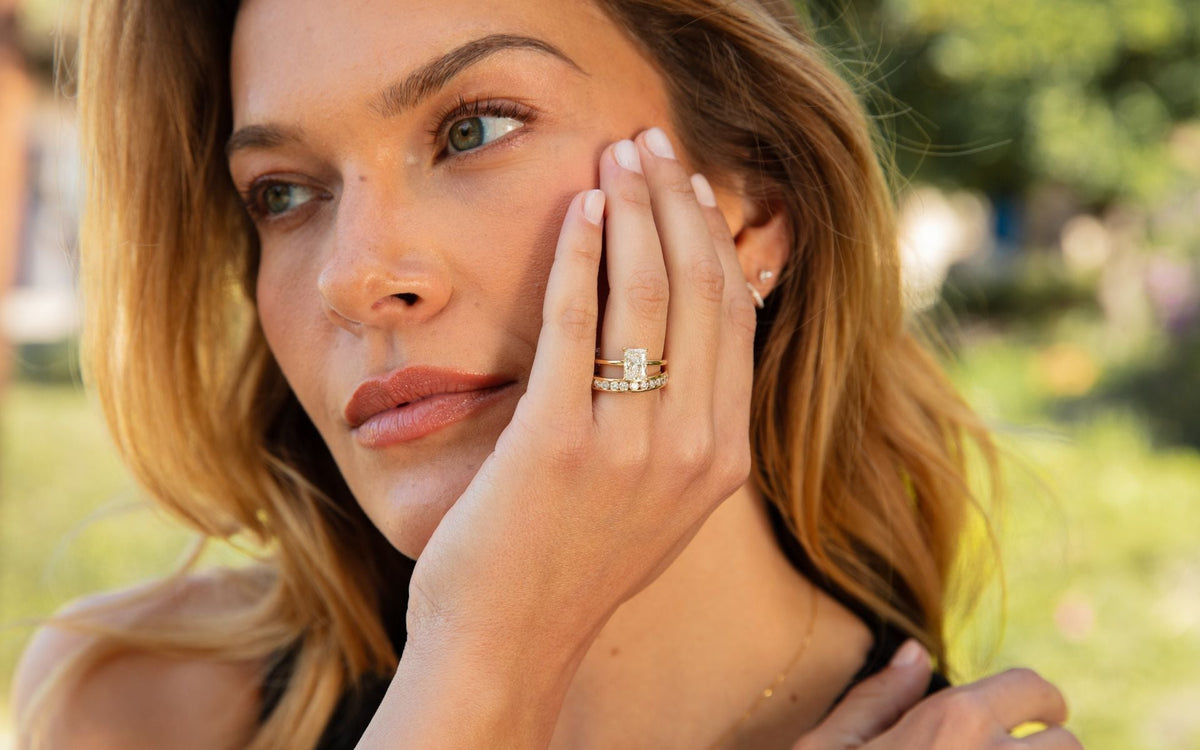

Channel setting - a guide to how this setting perfects your jewelry

The channel setting is one of the most modern and stylish types of setting in the art of goldsmithing. It is perfect for diamonds, colored gemstones, memoir rings and high-quality jewelry in gold, silver or platinum. This setting is characterized by the elegant, seamless integration of the stones, which are evenly arranged next to each other in a narrow channel and securely set. This method creates a modern, smooth look and gives each piece of jewelry an impressive, minimalist character.
The most important facts at a glance
Features of the channel setting in jewelry
Find out which properties make up the channel version.
Learn more
History and development of the diamond setting
When the version was created and how it developed.
Learn more
Advantages and disadvantages: Qualities and challenges of the channel capture
Discover the pros and cons of voting for the canal version.
Learn more
Conclusion: Why you should choose this setting for your piece of jewelry!
Find out whether this frame suits you and your wishes.
Learn more
Features of the channel setting in jewelry
The channel setting is a setting in which the stones are set between two parallel rails made of precious metal. The diamond or gemstone is placed precisely in a narrow groove in the ring band or other piece of jewelry and then fixed in place by gently pressing the metal on both sides. As a result, the stones sit firmly and without visible prongs or bars. This design enables a particularly smooth, continuous overall appearance and makes the stones appear to be lined up. As the surface of the piece of jewelry is clean and closed, channel settings are ideal for people who prefer a clear, modern style or want to wear their ring every day.
The setting harmonizes particularly well with stones in square, straight or slightly elongated shapes, but round diamonds can also be perfectly integrated in a channel setting. This method is more popular than ever for high-quality diamond rings, as it combines a secure setting with aesthetic sophistication.

History and development of the diamond setting
Today, it is hard to imagine modern jewelry collections without the channel setting, but its origins go back much further. The technique was originally developed in classical goldsmithing when jewelers were looking for a method to integrate several gemstones evenly and stably into a piece of jewelry without disturbing the delicate look with visible setting components. Early memoire and wedding rings already show preforms of what later became known as the channel setting: Gemstones that were set close together in an elongated recess, an early channel.
With the refinement of metalworking and the advent of precise tools in the 19th and early 20th centuries, techniques were further developed. Goldsmiths began to cut fine grooves into the ring band or other pieces of jewelry and secure the stones by tensioning the precious metal. This created a new type of setting that was both stable and aesthetically minimalist.
Later, as the jewelry industry modernized, many traditional techniques were reinterpreted, including the channel setting. Manufacturers and jewellers realized that the method was a perfect combination of security and elegance. Especially in the second half of the 20th century, it was increasingly integrated by international jewelry brands into their high-quality rings and jewelry. The trend towards clean lines, minimalism in fashion and the increasing popularity of modern setting styles ensured that the channel setting became an integral part of many collections.
Over time, a variety of versions were created, adapted to different stone shapes, ring widths and designs. The technique was combined with the pavé setting, combined with wide rail settings or used as a sophisticated alternative to the classic prong setting. Today, the channel setting is considered one of the most advanced types of setting, as it is both functional and aesthetically pleasing. It is a good example of how traditional goldsmithing techniques merge with modern precision work to create a timeless, high-quality and long-lasting solution.

Advantages and disadvantages: Qualities and challenges of the channel capture
One of the biggest advantages of the channel setting is its secure setting, as the stone is firmly attached between two metal sides. There are no protruding prongs, making the setting ideal for people who wear their ring every day and want to prevent it from catching on clothing. The design also ensures that the stones are well protected and retain their quality for a long time.
The channel setting also offers many visual advantages: it creates a modern, smooth look that is particularly attractive with diamonds of approximately the same size. The stones look like a closed line of pure sparkle. This sometimes even creates a subtle optical illusion that enhances the brilliance.
However, there are also limitations. As the light is less able to enter the stone from the side, the brilliance appears somewhat more restrained than in a prong setting or pavé setting. In addition, the channel setting is technically demanding and requires an experienced jeweler, especially if the stones are to be perfectly aligned. This method is less suitable for very large stones or irregular shapes.
How is the channel setting best accentuated in jewelry?
The channel setting really comes into its own in rings where several diamonds or gemstones are set harmoniously next to each other. Eternity rings, memoir rings or modern wedding rings benefit greatly from this style. It also looks extremely elegant in bracelets or clearly structured earrings, and in combination with gold, silver or platinum, it creates pieces of jewelry that are robust, modern and stylish at the same time. The setting is particularly popular in collections that focus on a clear design language, as the precious metal and the stones merge into a flowing unit. Depending on design preferences, the channel setting can be perfectly combined with other types of setting or used as the central element for a unique piece of jewelry, and the stability of a channel-set ring is reliably maintained even if the size of the ring changes - a major advantage over more delicate settings.

Our tip:
Make sure that the gemstones in the channel are perfectly positioned with minimal, even spacing between them to ensure both safety and an uninterrupted line of light
Frequently asked questions
A channel setting is a setting in which several diamonds or gemstones sit closely together in an elongated metal channel and are fixed between two rails made of precious metal.
Very secure. The stones are firmly clamped between two sturdy metal sides so that they are less susceptible to knocks or snagging than with open settings.
It is particularly suitable for rings (e.g. memoire and wedding rings), bracelets and modern earrings where several small stones are to form an even line.
Diamonds or gemstones with a square, round or slightly rectangular shape work best. It is important that the stones are of a similar size so that the row looks harmonious.
A little, yes. As less light enters from the side, the brilliance is slightly more restrained than with a prong setting. On the other hand, the row of stones appears even and clearly structured.
Yes, the smooth surface and lack of ridges make them ideal for everyday use - perfect for people with active lifestyles.
Conclusion: Why you should choose this setting for your piece of jewelry!
The channel setting is one of the most modern and at the same time safest methods of elegantly setting a diamond or gemstone in a piece of jewelry. It combines clean lines, minimalist style and a robust construction that reliably protects the stone. Whether in gold, silver or platinum, the channel setting has a unique, glamorous look and is perfect for people who want a durable, high-quality setting.
Anyone looking for a piece of jewelry that is uniform, modern and visually impressive will find the channel setting an ideal choice. It offers the perfect blend of functionality, aesthetics and long-lasting quality - and showcases the stones in such a way that they become a harmonious part of the overall piece of jewelry.