
Tension setting - the exquisite setting that enchants your jewelry
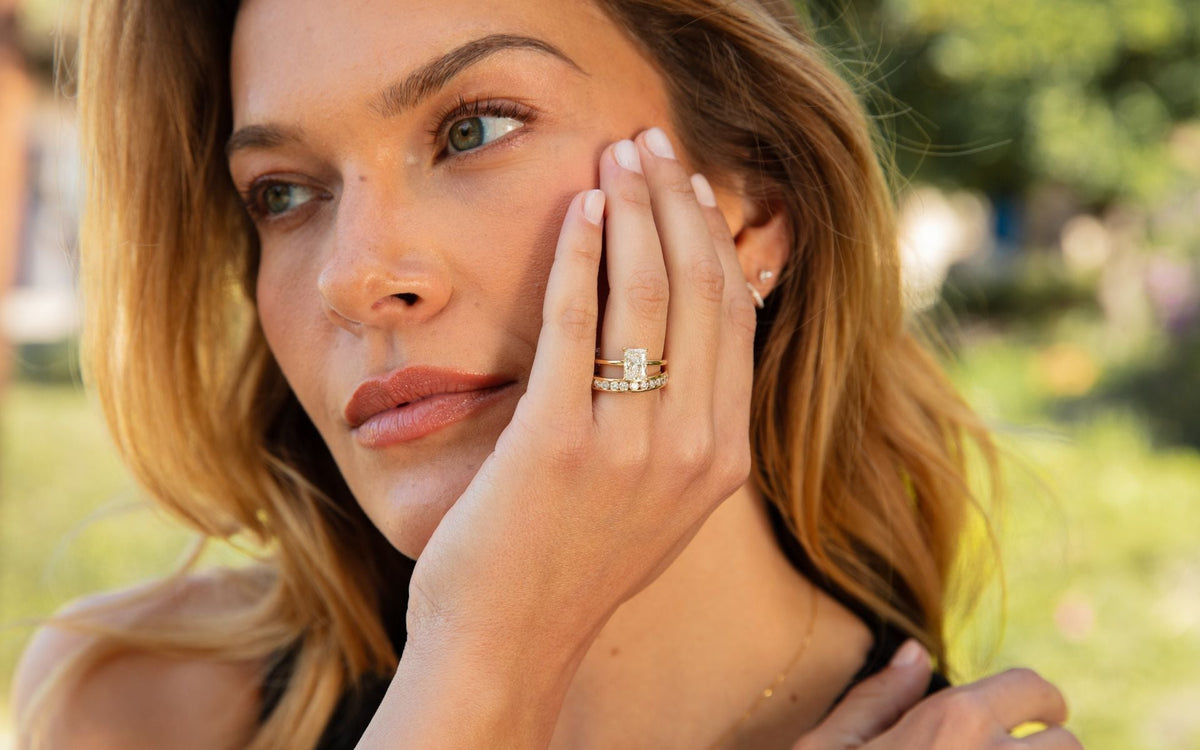
The tension setting is one of the most modern and innovative types of setting in the world of jewelry. With its seemingly weightless appearance, it creates the impression that the gemstone - usually a diamond, ruby or sapphire - is floating freely between two ends of the ring shank. This unusual aesthetic clearly stands out from classic settings such as prong settings or channel settings and has been delighting lovers of modern design for many years. Rings with tension settings in particular look exquisite, timeless and avant-garde at the same time. Thanks to high-quality materials such as platinum or white gold and precise workmanship, a piece of jewelry of remarkable stability and elegance is created. The tension setting gives the stone an incomparable look and sets it off more impressively than almost any other setting.
The most important things at a glance
Features of the tension setting - how the gemstone is held
Find out what characterizes the frame and what distinguishes it from others.
Learn more
History and origin of the setting for rings and other jewelry
Here you can find out how the tension setting came about and what special role it plays in the history and design of jewelry.
Learn more
Advantages and disadvantages of the floating stone
This section highlights both the advantages of the clamping fixture and the particular challenges it poses.
Learn more
What is the best way to show off the tension setting in jewelry?
Learn how the tension setting significantly increases the overall effect and value of a piece of jewelry.
Learn more
Features of the tension setting - how the gemstone is held
A tension setting is characterized by the fact that the gemstone is held exclusively by the tension of the metal. The ring band is worked in such a way that a precisely calculated gap is created in which the stone is securely fixed. Unlike a metal setting, channel setting or prong setting, there are no visible mountings that enclose the gemstone. Instead, it appears to float freely between the two ends of the ring shank.
This design creates a modern and clear aesthetic that accentuates the gemstone particularly well. Light can penetrate the stone almost unhindered, which significantly enhances its brilliance and sparkle. The open design gives the ring a light, minimalist yet high-quality appearance. Clamping settings are particularly suitable for gemstones of excellent quality, as the unobstructed view of the stone makes both its beauty and any inclusions more visible. Typical stones are diamonds, rubies and sapphires, which are hard enough to withstand the pressure of the ring shank without any problems.
As the stone is held in place solely by the tension of the metal, the choice of material plays a decisive role. Platinum in particular, but also hard gold alloys such as white gold or high-carat yellow gold are ideal. Soft metals or metals that are too thin would not be able to withstand the strain. Modern settings often use precise CAD technology to ensure the perfect fit for the stone and ring band, an important aspect for a secure and elegant piece of jewelry.

History and origin of the setting for rings and other jewelry
Compared to many traditional types of setting, the tension setting is a relatively recent invention. While classic settings such as prong settings were already in use in the Middle Ages, the tension setting only emerged in the 20th century, when advances in metalworking and the latest goldsmithing techniques opened up new design possibilities. Particularly in cities such as Antwerp, one of the most important centers of the diamond industry, intensive work was carried out on innovative types of setting.
With the development of high-tech equipment, computer-aided calculations and the ability to shape precious metals more precisely, the tension setting finally became feasible. It is considered one of the greatest technical achievements of modern jewelry design, as it not only created a new aesthetic, but also demanded the utmost precision. Only through exact calculations of the metal tension and the shape of the stone can the setting function reliably.
In the 1980s and 1990s, the tension setting began its international triumphal march. Designers in Europe and the USA developed variants in which the stone was additionally stabilized by a combination of tension, concealed grooves or micro-notches. Modern technologies made it possible to perfect the impression of a completely free-floating gemstone.
Today, the tension setting is one of the most remarkable types of setting in modern collections and is particularly popular with lovers of minimalist, clean lines. It stands for innovation, technical brilliance and a new approach to jewelry design.
Watch out!
As the stone is open at the side, it catches a lot of light. But be careful: the open side also makes it more susceptible to knocks. Be particularly careful when working manually!
Advantages and disadvantages of the floating stone: qualities and challenges
The tension setting is an attractive choice for engagement rings, partner rings and modern jewelry. One of its greatest advantages is its unusual style, in which the stone appears to float and is not covered by any metal setting. This allows the light to penetrate the gemstone unhindered, highlighting its brilliance and sparkle more than with many other types of setting. This visual lightness gives the piece of jewelry a particularly elegant and modern look. Rings with a tension setting are considered exquisite and aesthetically sophisticated. Another advantage is their uniqueness. Anyone looking for a piece of jewelry that clearly stands out from classic designs will find an excellent choice in a tension setting. The open design also makes it easy to clean, as the stone is accessible from many sides.
However, the tension setting is only suitable for particularly hard gemstones such as diamonds, sapphires or rubies. Softer stones may not be able to withstand the pressure of the ring rail and could be damaged. The tension setting is also more sensitive to strong impacts or deformations, as the metal plays a decisive role in securely holding it in place. An impact or deformation of the ring band can affect the fit of the stone, so such a ring should be worn carefully and checked regularly. It is also technically demanding to manufacture, which can increase the cost compared to simpler types of setting. Choosing the correct ring size is also crucial, as subsequent changes are more difficult to make.

What is the best way to show off the tension setting in jewelry?
The tension setting is particularly effective in rings, as the ring shank provides the ideal structure to create the necessary tension. Engagement rings with tension settings are among the most modern designs of all and emphasize the beauty of the gemstone in a unique way. The simple ring shank allows the diamond or colored gemstone to become the focal point of the piece of jewelry.
In combination with platinum, the setting looks particularly elegant, as the material is hard, durable and of high quality. White gold offers a similar effect and creates a clear, bright look. Yellow gold or rose gold, on the other hand, give the ring a warm touch and set off colored stones such as rubies or sapphires perfectly.
The tension setting is ideal for people who are looking for a timeless yet unusual design. The piece of jewelry looks particularly modern when the ring band has a narrow or geometric design. Collections that combine tension setting and other types of setting such as channel setting or bezel setting are also popular. The result is a stylish mix of classic stability and modern openness.
Frequently asked questions
A tension setting is a modern type of setting in which the gemstone - usually a diamond - is held solely by the tension of the metal and thus appears to float freely between the ends of the ring shank.
If manufactured correctly, a tension setting is very secure. High-quality metals such as platinum or hard gold alloys ensure a stable tension that holds the stone firmly in place.
Hard gemstones such as diamonds, sapphires and rubies are ideal. Softer stones are not suitable as they would not withstand the pressure of the ring band.
Only to a limited extent. As the tension is calculated exactly to the stone, resizing can be difficult or impossible. It is important to choose the correct ring size when purchasing.
The clamping frame allows maximum incidence of light and thus enhances the brilliance of the stone. It also creates a modern, minimalist look without visible retaining elements.
Yes, it is more sensitive to strong impacts, is not suitable for soft stones and is difficult to adjust retrospectively. It is also technically demanding and therefore often more expensive.
Conclusion: The aesthetics of jewelry with a diamond in a tension setting
The tension setting is one of the most innovative types of setting in the modern jewelry world and combines technical precision with outstanding aesthetics and attractiveness. With its unique floating effect, it impressively accentuates gemstones such as diamonds, rubies and sapphires. It is ideal for people who are looking for a modern, unusual and elegant piece of jewelry. Even though it makes certain demands in terms of material, stone quality and wearing habits, the tension setting remains an exquisite choice for anyone who values clear lines, timeless beauty and the highest quality craftsmanship.