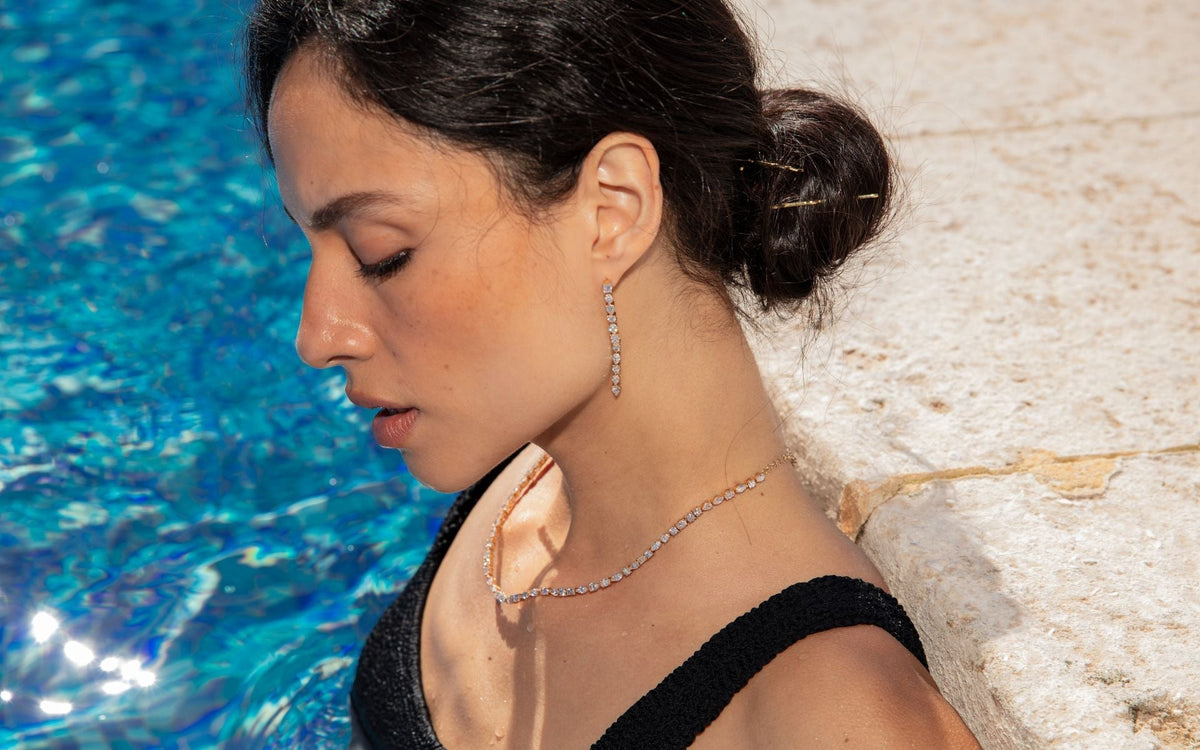

The pavé setting - timeless sparkle of diamonds in a diamond ring

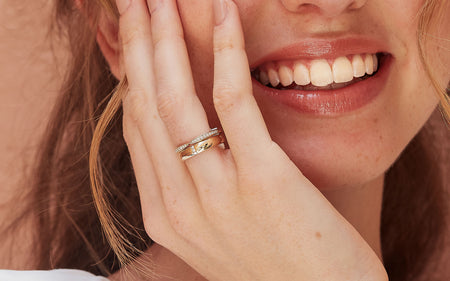
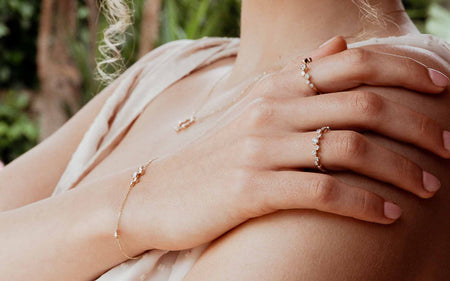
Would you like to set accents with stylish but not obtrusive jewelry? The pavé setting is perfect for anyone who wants to combine delicacy, elegance and sparkling sophistication in one piece of jewelry. Pavé setting - often referred to as pavé or pavé style - is a very popular type of setting in high-quality jewelry. The term is derived from the French word "pavé" , which means "paved" . It is precisely this image that is reflected in a ring, necklace or diamond ring that is set with many small diamonds close together. The tiny, symmetrically arranged gemstones create a shimmering surface that transforms any piece of jewelry into a glittering highlight. This setting has become a real classic, especially for engagement rings, wedding rings and modern designs.
The most important facts at a glance
Features of the pavé setting - The stylish setting for small diamonds
Find out which properties make up the pavé setting.
Learn more
History & development of the pavé version
Find out where and how the version was created.
Learn more
Advantages and disadvantages of the pavé setting for rings or other pieces of jewelry
Discover the pros and cons of choosing the pavé version.
Learn more
How the pavé setting is best accentuated in jewelry
Find out which shape of pavé setting suits you and your piece of jewelry best.
Learn more

Features of the pavé setting - The stylish setting for small diamonds
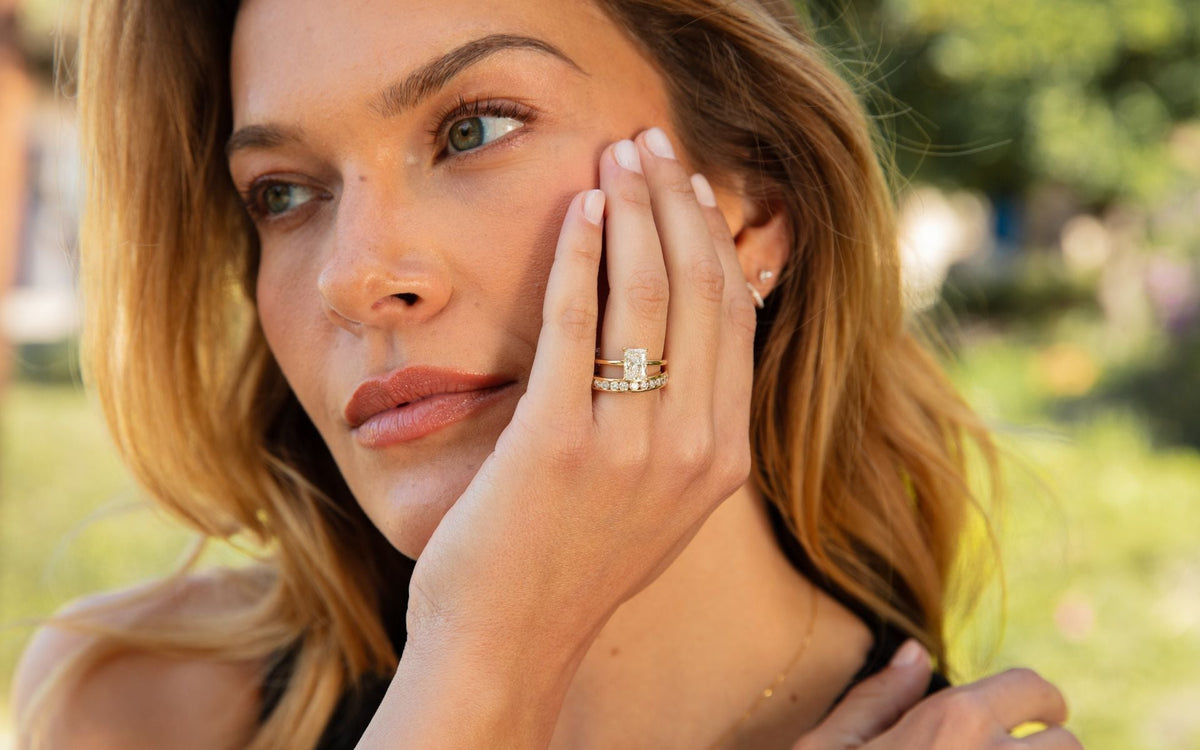
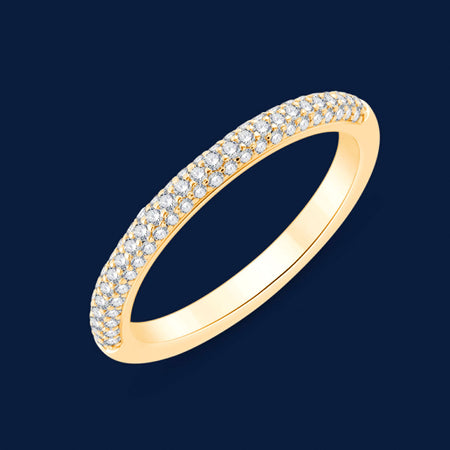
The pavé setting is characterized by the fact that many small gemstones, usually round brilliant-cut diamonds, lie close together and are held in place by fine metal prongs, grains or beads. These tiny metal points fix each stone in such a way that as little precious metal as possible remains visible and the brilliance is shown to its best advantage. As a result, the surface looks like a diamond crust that catches the light from all directions. The top layer of the piece of jewelry is typically almost completely covered with gemstones, which reflects the light particularly intensely. The tiny grains or zinc, which mean that the surrounding metal is barely visible, is an important advantage over more solid settings such as the bezel setting or channel setting. Another key feature is the even and symmetrical arrangement of the small gemstones. Each diamond sits precisely in its own recess and is carefully fixed in place to create a smooth, harmonious and sparkling surface. This regular structure is reminiscent of a fine, glittering stone pavement, which gives the piece of jewelry its characteristic pavé look. The more diamonds are used, the more intense this effect becomes. Diamonds in a pavé setting are usually very small, as they are set close together. They usually have between 0.005 and 0.02 carats per stone. In particularly fine micro pavé settings, the diamonds can be as small as 0.001 to 0.005 carats. In somewhat more striking pavé designs, stones up to 0.03 or 0.05 carats are occasionally used, but this is rather rare. The small carat sizes make the typical pavé look possible.
The pavé setting is often made on white gold, yellow gold or platinum, whereby the choice of metal influences the style of the piece of jewelry and the overall impression. It is suitable for ring settings, wedding rings, diamond rings, pendants and even bracelets. Many collections combine pavé elements with a large central diamond in a prong setting or inset bezel setting to further enhance the sparkle.

History & development of the pavé version
The pavé setting has its roots in the European jewelry art of the 18th and early 19th centuries, particularly in France, where the term French "pavé" originated. At that time, goldsmiths began to set many small diamonds so close together that the ring looked as if it was covered with a glittering stone pavé. This technique was initially used primarily in aristocratic jewelry to create luxurious surfaces without having to use only large and very expensive diamonds.
Over the course of the 19th century, particularly in the Belle Époque and Art Deco eras, the pavé setting developed further. Advances in metal processing made it possible for jewelers to form tinier grains and prongs and thus produce even finer patterns and extremely delicate pavé surfaces. Jewelry houses in Paris, Antwerp and later New York made this setting internationally popular.
Since the 20th century, the pavé setting has been firmly anchored in modern jewelry art, especially in engagement rings, wedding rings and diamond jewelry with accentuated sparkling surfaces. Today, it is more sophisticated than ever before thanks to more precise tools and microscope techniques.
Advantages and disadvantages of the pavé setting for rings or other pieces of jewelry

One disadvantage can be that the tiny stones - depending on the processing - are more likely to become loose than a single large stone. However, high-quality pavé settings significantly reduce this risk. Care must also be taken with the ring size: Larger adjustments can affect the stability of the grains.
Discover pavé rings from Pukka Berlin


How the pavé setting is best accentuated in jewelry

The pavé setting is an excellent choice for pieces of jewelry that need to exude a modern, stylish yet classic character.
It is also ideal for emeralds, smaller gemstones or embellishments where a continuous, sparkling surface is desired. Due to the symmetrical arrangement, the pavé style looks particularly elegant and can be easily combined with other types of setting.

Did you know?
The tiny dots of metal between the diamonds are deliberately polished to reflect light, creating the optical illusion that makes the ring look even more densely set with diamonds than it actually is. It is a trick of the setter that transforms metal into apparent stones!
Frequently asked questions
A pavé setting is a type of setting in which many small diamonds or gemstones are set close together and fixed with tiny metal grains to create a sparkling, "paved" surface.
The term comes from the French word "pavé", which means "paved" - the diamonds look like a glittering pavement of small stones.
With high-quality workmanship, yes. The small gemstones are held securely by fine grains or prongs. However, stones can be lost more easily with inferior workmanship.
White gold, yellow gold, rose gold and platinum are most commonly used. White gold and platinum in particular enhance the sparkle, as they are barely visible between the stones.
Mostly round brilliant-cut diamonds, as they reflect the light optimally. Small gemstones or colored gemstones can also be used
Rare with high-quality frames. Cheap or poorly made frames are more susceptible. Regular checks at the jeweler are recommended.
Conclusion: Expand your collection with an extraordinary gemstone & diamond setting
The pavé setting is one of the most elegant and popular types of setting in the world of high-quality jewelry. It allows many small diamonds to be set in such a way that they create an intense, shimmering sparkle - perfect for engagement rings, wedding rings and modern jewelry. Thanks to its versatility, glamorous aesthetics and the ability to achieve a great effect even with smaller gemstones, the pavé setting is one of the absolute classics of the jewelry world.
Whether as a delicate accent line, opulent setting or in combination with large diamonds: A pavé setting gives every piece of jewelry a luxurious, stylish and brilliant look.