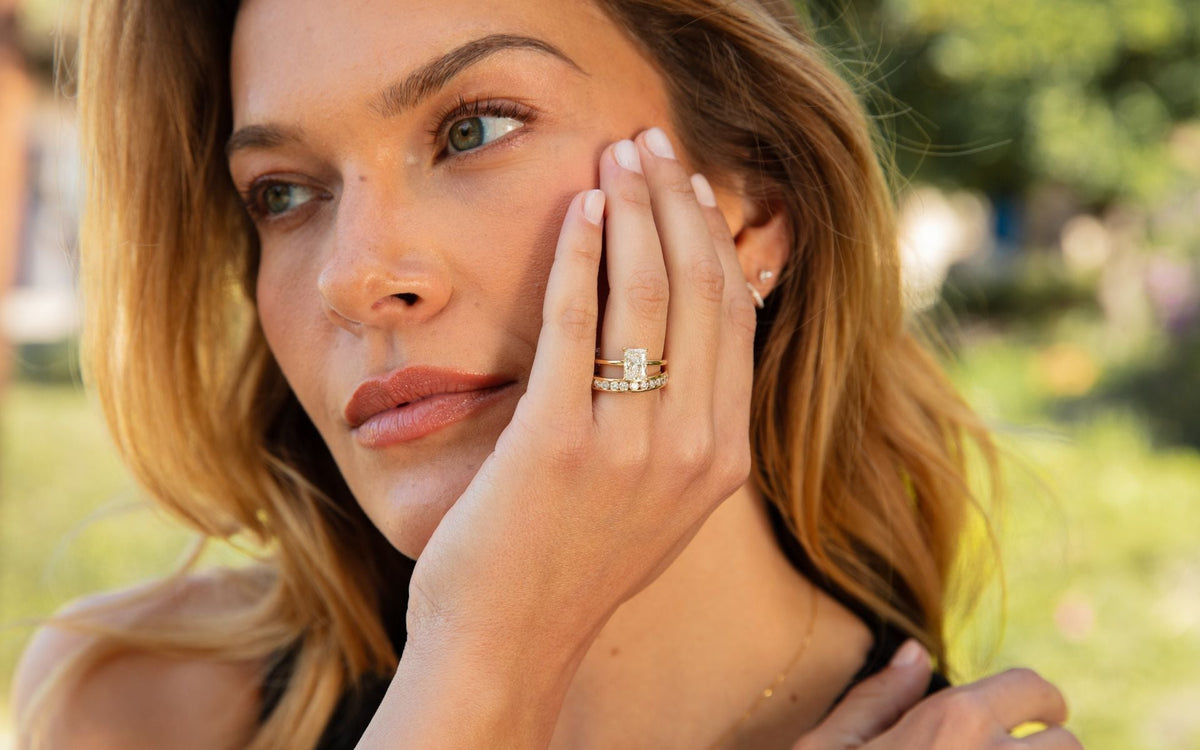

Bar setting - secure setting for diamonds & gemstones in jewelry
The barsetting is one of the most fascinating types of setting in modern jewelry design. It combines a high level of security for the gemstone with a clear, contemporary appearance. This type of setting is particularly popular for rings because it holds the diamond or gemstone securely, while at the same time capturing enough light to create maximum brilliance and sparkle. In combination with alternative settings such as the bezel setting, channel setting, rubbed setting or the classic prong setting, the bar setting offers a unique blend of aesthetics, stability and modern design language.
The most important things at a glance
Features of the bar frame: what makes the frame so special
Find out what characterizes the frame and what distinguishes it from others.
Learn more
History and development of the bar setting for diamonds
Here you can find out how the bar setting came about and when it gained importance.
Learn more
How can a gemstone be best accentuated by the bar setting in jewelry?
Learn how versatile the bar setting can be used in jewelry.
Learn more
Advantages and disadvantages of the setting for your piece of jewelry
This section highlights both the advantages of beam framing and the particular challenges it poses.
Learn more
Features of the bar frame: what makes the frame so special
The bar setting is a variant of the channel setting and is characterized by the fact that the stone - often a brilliant-cut diamond - is held between two parallel metal strips. These metal strips, usually made of precious metals such as white gold, yellow gold or platinum, enclose the stone on the sides, while the top and bottom remain largely open. This allows light to optimally penetrate the crown, round bar and tip of the cut gemstone, which significantly enhances its brilliance.
As the setting type works with precise indentations or a recess in the piece of jewelry, the stone sits securely in place without being completely surrounded by metal. Particularly small diamonds or small gemstones can be arranged evenly in this setting, giving the impression that the stones are sitting in a floating line between the bars.

History and development of the bar setting for diamonds
The bar setting developed from the classic channel setting, which was historically known as the"channel setting". The bar setting emerged in the second half of the 20th century, when modern goldsmithing techniques and the trend towards clear, minimalist designs made new types of setting possible. It developed as a contemporary continuation of the channel setting and became particularly popular from the 1980s onwards. While the channel setting captures the gemstones completely between two rails of precious metal, modern jewelry designers wanted to create a version that appeared somewhat lighter and allowed more light to pass through. This gave rise to the bar setting, a setting in which metal strips are used specifically to hold gemstones securely, while at the same time allowing large open areas.
The emergence of this type of setting is closely linked to the development of modern diamond cuts such as the round cut, brilliant cut or oval cut. These cut shapes required settings that did not hinder their brilliance. Due to the possibility of using precious metal in a minimalist way and leaving the top of the gemstones largely free, the bar setting became a popular setting for designers who prefer clean lines.
In many modern collections, the bar setting is therefore seen as a stylistic advancement of other types of setting. It combines the security of a bezel setting, the linear order of a channel setting and the open lightness of the prong setting to create a new, independent setting that is both practical and aesthetically pleasing.
How can a gemstone be best accentuated by the bar setting in jewelry?
The bar setting is particularly suitable for rings, whether diamond rings, narrow memory rings or designs with several small diamonds arranged evenly next to each other like paving stones. As the stones appear to float between the metal strips, an optical illusion of lightness is created.
In combination with a central stone, for example an emerald, an oval-cut gemstone or a brilliant-cut diamond, side bar settings can be used to arrange additional small diamonds around the main stone. The top remains open, the stones sparkle intensely and a modern, harmonious overall look is created.
The bar setting is also popular in bracelets and necklaces because it holds the gemstones securely and at the same time creates a clear, elegant line. Many jewelers prefer white gold or platinum, as these precious metals further enhance the sparkle of the stones and give the setting a luxurious appearance.

Advantages and disadvantages of the setting for your piece of jewelry
The bar setting offers an excellent balance between security and brilliance. As the diamond is held at the side by narrow metal strips, the round bar and the sharp edges of the stone are well protected from damage. At the same time, the open top allows plenty of light to enter, which greatly emphasizes the brilliance. The setting is particularly suitable for rings and pieces of jewelry that are to be worn every day. The smooth surface without protruding prongs reduces the risk of getting caught. In addition, the straight lines and evenly arranged gemstones give the bar setting a decidedly modern look.
The disadvantage of this type of setting is that it requires very precise craftsmanship. In order to securely fix the gemstone, tiny indentations or recesses are milled into the metal and then pressed down with a graver. The more the stones are integrated into the piece of jewelry, the less light enters from the side - a minimal difference to an open prong setting. The ring size of a bar setting can also only be adjusted to a limited extent, as the stone is embedded directly into the ring band.

Funfact:
The bar setting is sometimes called "semi-protected" by jewelers because while the bars provide protection, the two open sides of the stones capture so much light that they can almost increase the brilliance of the stone to the level of a much more fragile prong setting. It is a rare balancing act between security and maximum light yield!
Frequently asked questions
The bar setting is a type of setting in which a gemstone is held between two parallel metal bars. These bars usually run at right angles to the ring band and hold the stone securely in place without completely enclosing it.
It allows plenty of light to enter from the sides so that the gemstone sparkles particularly brightly. At the same time, the design is modern, clear and minimalist. The stone is well protected without being visually restricted.
It is most commonly used for round and baguette-shaped diamonds, but the design is also well suited for princess, emerald or trillion cuts - especially for stones with straight edges.
The setting is considered secure as the bars hold the stone firmly to the side. However, it is less protected than a bezel setting as the top of the gemstone is exposed. Care should be taken with very soft gemstones.
Bar settings are often found in modern rings, memoire rings, wedding rings or clear, geometric jewelry designs. They are ideal for narrow, elegant pieces of jewelry or rows of smaller stones.
Conclusion: The modern alternative to trunking
The bar setting is a modern and extremely elegant type of setting that harmoniously combines security and brilliance. It protects the stone without completely enclosing it, while allowing enough light to enter to ensure maximum sparkle. As a variant of the channel setting, it combines the advantages of a stable metal structure with the open lightness of a clawless setting. In rings, bracelets or other high-quality pieces of jewelry, the bar setting ensures a timeless, clear design and a modern look that delights both jewelry lovers and designers. If you are looking for a setting that perfectly balances precious metal and gemstone, the bar setting is the ideal choice.