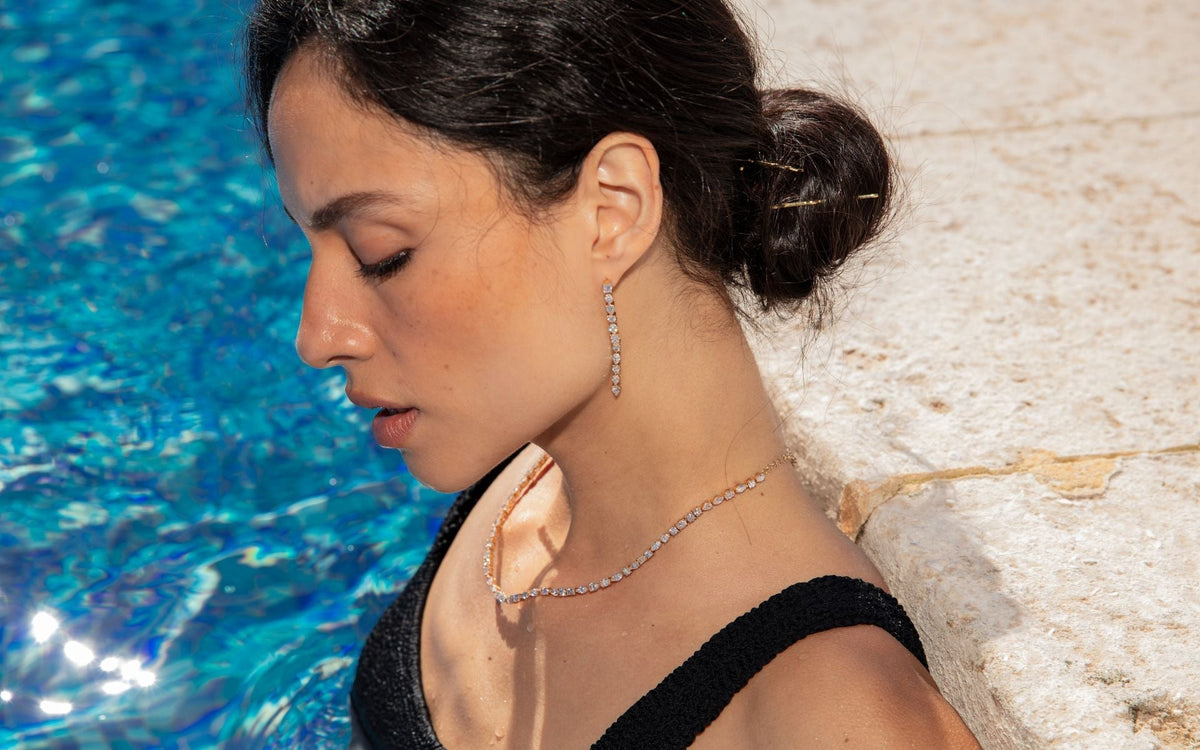

The pear cut diamond - the elegance of teardrop-shaped diamonds

If you want a piece of jewelry that combines romance and beautiful melancholy, then this diamond shape is perfect for you. The pear cut, also known as the pear cut or pendeloque cut, is a very versatile and high-quality diamond shape for diamond jewelry. This special shape combines the brilliance of a round brilliant with the elongated elegance of the marquise cut, creating a unique combination that is both timeless and exceptionally romantic. The teardrop-shaped diamond captivates with its pointed and round end, making the diamond reminiscent of a delicate teardrop or an elegant pear. The teardrop cut is particularly effective in engagement rings, as a solitaire or in exclusive diamond jewelry and makes fingers appear longer. The teardrop shape symbolizes tears of joy and turns every piece of jewelry into an emotional statement full of meaning.
The most important facts at a glance
Characteristics of the drop cut - drop shape, symmetry and cut shape
Find out which properties make up the drop cut.
Learn more
History & origin of the Pear Cut diamond
Where the drop cut got its name from and how it was developed.
Learn more
Advantages and disadvantages of the drop-shaped diamond.
Discover the pros and cons of choosing the drip cut.
Learn more
How can you best show off the drop cut in your piece of jewelry?
Find out how the pear cut suits you and your piece of jewelry best.
Learn more
Characteristics of the drop cut - drop shape, symmetry and cut shape
The teardrop cut is characterized by its asymmetrical, teardrop shape, in which a round end merges gently into a pointed side. This special shape makes the drop-cut diamond a modified brilliant cut that combines the characteristic elements of the classic brilliant cut with the elongated shape of the marquise cut. Drop-shaped diamonds typically have 58 facets, whose symmetrical arrangement of facets ensures maximum brilliance and intense light reflection. The number of facets was determined when the cut was invented and has remained unchanged to this day - proof that this proportion is optimal.
A key feature of the pear cut is its ideal length-to-width ratio, which should be between 1.45 and 1.75. Most experts and jewelers recommend a ratio of around 1.45 to 1.65 for a classic, balanced drop shape. With a slimmer ratio above 1.65, the drop-shaped diamond appears even more elongated and visually lengthens the fingers even more - ideal for engagement rings. This elongated shape makes the stone appear larger than round diamonds of the same carat weight. In fact, the teardrop shape offers around eight percent more visible surface area than a round brilliant of the same weight.
The shape of the pear cut requires the utmost precision when cutting. The round end should correspond to a perfect semicircle, while the shoulders must be evenly rounded and the wings gently curved. The tip of the diamond at the narrow end must be cut precisely to create the characteristic teardrop shape. Asymmetries or bulging areas on the shoulders conceal weight and reduce the overall effect of the stone. Symmetry is crucial for drop-shaped diamonds: if you draw an imaginary line from the tip through the center of the diamond, both sides should be perfectly symmetrical.

History & origin of the Pear Cut diamond
The history of the pear cut dates back to the middle of the 15th century and is closely linked to a ground-breaking invention in the art of diamond cutting. In 1475, the Flemish diamond cutter Lodewyk van Bercken from Flanders, now Belgium, revolutionized the entire industry when he invented the diamond grinding wheel - also known as the scaif. This innovative polishing wheel enabled him to set facets with complete symmetry on a rough diamond for the first time. This invention was to change diamond cutting forever and laid the foundation for the development of complex diamond cuts.
In the same year, 1475, Lodewyk van Bercken created the world's first marquise diamond - the forerunner of today's pear cut. The name "pendeloque" is derived from the French word for "pendulum" or "pendule", as the shape is reminiscent of the pendulum of a clock. This so-called pendeloque cut developed continuously over the centuries, but the basic number of facets remained constant at 58 - just like the classic brilliant cut diamond. Lodewyk van Bercken had evidently already found the perfect proportion with his 58 facets, because the drop cut has not deviated from this standard even after more than 500 years.
Since its beginnings in the middle of the 15th century, diamond cutters have worked tirelessly to determine the ideal ratio of length to width for pear-shaped diamonds in order to optimize brilliance and sparkle. While in the round brilliant cut the creative freedom of innovative cutters has led to different facet patterns, in the pear cut the original conception seems to have been so perfect that fundamental changes were not necessary. The shape itself, however, could vary: From plump, round pears to extremely elongated cut drops, a wide variety of proportions can be found in antique and modern diamond jewelry.
The pear cut is also known as the pear cut or pendeloque cut and has never lost its popularity over the centuries. In the Baroque period and the 18th century, it was particularly popular for pendants and earrings, as the drop shape was perfectly suited to the flowing, romantic designs of these eras. In the Victorian era, teardrop-shaped diamonds symbolized tears of joy and were often given as gifts for weddings or happy occasions.
Today, the teardrop cut is a popular choice for engagement rings and is worn by many celebrities. Famous examples include Elizabeth Taylor's iconic 69-carat pear diamond engagement ring by Richard Burton, Ariana Grande's eye-catching drop ring by Dalton Gomez, and Cardi B's stunning 8-carat drop-shaped diamond ring. These celebrity wearers have contributed to a renewed focus on the drop cut as a symbol of individuality and elegance.

Since its beginnings in the mid-15th century, diamond cutters have worked tirelessly to determine the ideal length-to-width ratio for pear-shaped diamonds in order to optimize brilliance and sparkle. While in the round brilliant cut the creative freedom of innovative cutters has led to different facet patterns, in the pear cut the original conception seems to have been so perfect that fundamental changes were not necessary. The shape itself, however, could vary: From plump, round pears to extremely elongated cut drops, a wide variety of proportions can be found in antique and modern diamond jewelry.
The pear cut is also known as the pear cut or pendeloque cut and has never lost its popularity over the centuries. In the Baroque period and the 18th century, it was particularly popular for pendants and earrings, as the drop shape was perfectly suited to the flowing, romantic designs of these eras. In the Victorian era, teardrop-shaped diamonds symbolized tears of joy and were often given as gifts for weddings or happy occasions.
Today, the teardrop cut is a popular choice for engagement rings and is worn by many celebrities. Famous examples include Elizabeth Taylor's iconic 69-carat pear diamond engagement ring by Richard Burton, Ariana Grande's eye-catching drop ring by Dalton Gomez, and Cardi B's stunning 8-carat drop-shaped diamond ring. These celebrity wearers have contributed to a renewed focus on the drop cut as a symbol of individuality and elegance.

Advantages and disadvantages of the drop-shaped diamond
The pear cut offers numerous advantages that make it a coveted choice for exclusive diamond jewelry. Its greatest advantage lies in its visual effect: due to its elongated shape, a pear cut diamond appears larger than a round diamond with the same carat weight. With around eight percent more visible surface area, the pear cut offers impressive value for money. This special shape looks elegant and feminine and makes the fingers appear longer and slimmer - a much appreciated effect, especially in engagement rings and solitaire rings.
The unique combination of round and pointed ends gives the drop cut a versatility that makes it perfect for both modern and vintage-inspired designs. The 58 facets ensure maximum brilliance and intense light reflection, which is in no way inferior to that of a round brilliant. Drop-shaped diamonds sparkle intensely and attract everyone's attention. Another plus point is the ability of the pear cut to cleverly conceal inclusions. Minor flaws are concealed by the facet arrangement, particularly at the round end and on the pointed edge, so that even stones with SI1 or SI2 clarity can appear flawless if the inclusions are placed correctly.
The romantic symbolism of the drop cut is another advantage: the shape is reminiscent of tears of joy, raindrops or drops of water and thus symbolizes emotions, nature and purity. In pieces of jewelry inspired by nature, pear-shaped diamonds can embody water and rain and lend a deeper meaning to any piece of jewelry. The pear shape is also extremely versatile: it is ideal for engagement rings, pendants, earrings and even piercings. Whether as the main stone in a solitaire or as an accent stone in more complex designs, the teardrop cut adapts to any style.


Nevertheless, the pear cut also has some disadvantages that should be considered when buying. The tip of the diamond is the most sensitive area and is susceptible to damage and chipping. This fragile tip must be protected by a suitable setting, ideally with V-shaped prongs that securely enclose the tip. Without appropriate protection, there is a risk that the tip may break off during daily wear.
Another disadvantage is that it can be difficult to find a well-cut pear-shaped diamond. Since gemological laboratories do not assign cut quality grades for fancy-shape diamonds such as the pear cut, you have to check the sparkle, symmetry and shape particularly carefully. One phenomenon that can occur with the pear cut as well as the oval and marquise cut is the bow-tie effect. This creates a dark, butterfly-shaped shadow in the middle of the stone if the light is not optimally reflected. The cut quality of a marquise diamond and also of the pear cut is decisive for the extent to which this effect occurs. As gemmological laboratories do not assign cut quality grades for the pear cut, the brilliance and symmetry of the stone must be checked particularly carefully. A well-cut pear-shaped diamond minimizes the bow-tie effect and ensures uniform sparkle over the entire surface.
Drop-shaped diamonds show the color of the diamond more than round brilliants, especially at the pointed edge. Therefore, a higher clarity in terms of color grade is recommended - at least color H or better to ensure that the stone appears white. With lower color grades, yellowish or brownish nuances can become visible, which detract from the overall effect. In addition, black inclusions or clearly visible dots in the center of the stone are visible to the naked eye, even with a pear cut, which is why the position of inclusions is particularly important. In combination with white gold or platinum, a color H or better is recommended, while with yellow gold or rose gold, even stones of color up to K can still appear colorless, as the metal reflects some of the natural color.

How can you best show off the drop cut in your piece of jewelry?

Another stylish option for engagement rings is the halo setting, in which smaller diamonds frame the teardrop-shaped main stone. This arrangement enhances the brilliance and makes the central diamond appear even more impressive. The halo emphasizes the special shape of the drop cut and gives the ring additional sparkle. If you prefer a more discreet setting, choose a classic solitaire setting with four or six prongs, which holds the stone securely and lets in plenty of light from all sides to achieve maximum brilliance.
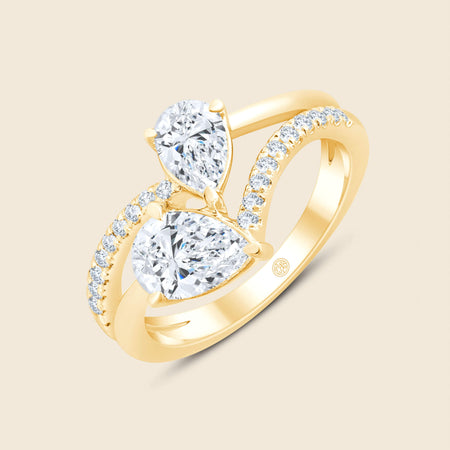
There are two popular options for the orientation of the drop-shaped diamond in a ring: The classic option is to wear the point down towards the hand (pointing towards the fingernail), which visually lengthens the fingers and makes the stone appear larger. This orientation is particularly popular for engagement rings and solitaire rings. The modern alternative is the so-called"East-West" setting, in which the diamond is set horizontally - the tip points to the side instead of upwards. This trendy look creates an unexpected, modern aesthetic and is ideal for those who prefer an unusual style.

In addition to rings and earrings, the drop cut is also ideal for pendants and necklaces. The teardrop shape is perfect for pendants as it hangs down naturally and elegantly emphasizes the décolleté. A drop-shaped diamond on a fine chain visually lengthens the neck and attracts everyone's attention. The symbolism of the drop shape is particularly effective for pendants: the diamond is reminiscent of a tear of joy or a raindrop and lends the piece of jewelry emotional depth.
As far as the choice of metal is concerned, the drop cut harmonizes with both platinum and white gold for a timeless, elegant look. Yellow gold gives the piece of jewelry a warm, vintage-inspired character, while rose gold adds a romantic, feminine touch. The combination with a narrow ring band makes the stone appear even larger without having to pay for more carat - a clever design trick for maximum impact.
For all pieces of jewelry, it is important that the setting adequately protects the point and emphasizes the symmetry of the stone. A well-set drop-shaped diamond has a balanced effect and allows the special shape to come into its own. The versatility of the pear cut allows for both classic and modern designs, making it a timeless choice for any jewelry lover.
Did you know?
The pear cut is sometimes also called the "queen of drops" because its elegant shape is reminiscent of classic crown jewels and also gives modern pieces of jewelry a royal touch.
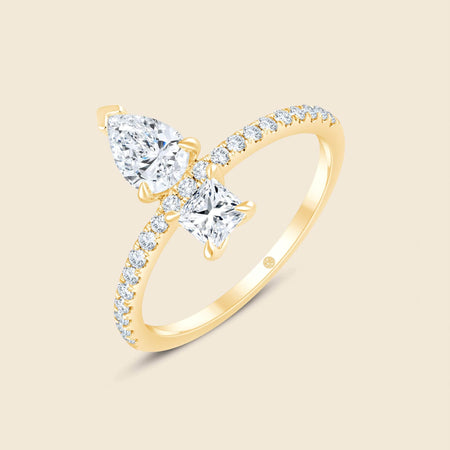
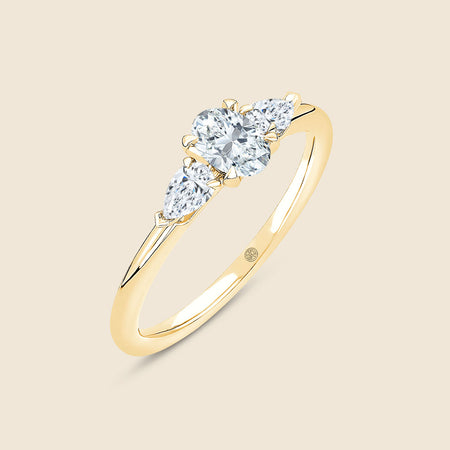
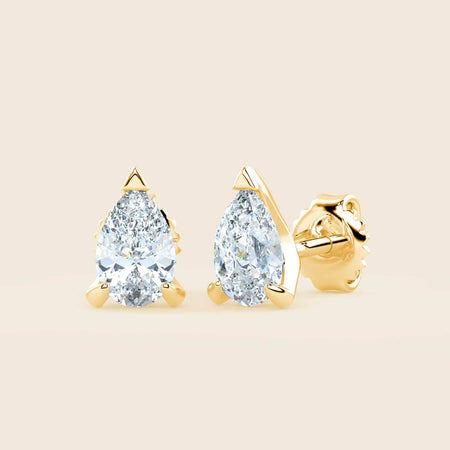
Discover drop cut rings from Pukka Berlin




Frequently asked questions
The pear cut is a combination of the round cut and the marquise cut. It has a round side and a pointed tip, which makes the shape resemble a drop or a teardrop.
It is popular because of its elegant, elongated shape, which makes the fingers appear slimmer. It also reflects a lot of light, making it a sparkling choice for rings, pendants and earrings.
A pear cut offers:high brilliance, similar to a brilliant cuta unique, asymmetrical shapea variety of wearing options (point up or down)a greater visual effect in relation to the carat weight
The pointed side is more sensitive as it can be damaged more quickly. We therefore recommend a prong setting to protect the tip or a bezel setting for more security.
Traditionally, the tip points downwards towards the fingertip, as this lengthens the look. But with pendants, it almost always points downwards. Ultimately, however, personal taste is the deciding factor.
The most popular are: Prong setting, especially with a protective V-prong point, bezel setting, which completely encloses the diamond, or the halo setting, which makes the drop appear larger.
Conclusion - the drop diamond that makes your engagement ring unique
The drop cut is an exceptional choice for anyone who wants to combine timeless elegance with romantic symbolism. Its teardrop shape with one pointed and one round end combines the brilliance of the classic brilliant cut with the elongated elegance of the marquise cut, creating a unique combination that is both vintage and modern. With its 58 facets, the drop-shaped diamond reflects the light intensely and creates an impressive brilliance that makes every piece of jewelry - whether engagement ring, solitaire, pendant or earrings - a real eye-catcher.
The drop cut is more than just a diamond shape - it is the perfect balance between tradition and modernity. Whether as a symbol of tears of joy in an engagement ring or as an elegant accent in earrings and pendants - the drop cut gives every piece of jewelry a special radiance that lasts for generations.