
Trillion or Trilliant cut - The unique triangular diamond

The trillion cut, often called the trilliant cut, is an exceptional choice for you. With its striking triangular shape, intense brilliance and clear geometric design, it is unique among diamond cuts. It gives your piece of jewelry an incomparable radiance. Whether for engagement rings, as a solitaire or as an elegant addition to a ring or pendant design, a diamond in the trillion cut attracts attention and stands for individuality, modernity and artistic precision.
The most important facts at a glance
Characteristics of the cut - the only triangle among the diamond shapes
Find out which properties make up the trillion cut.
Learn more
History and creation of the trillion or trilliant diamond
Find out where the trillion/trilliant diamond was invented and how it has evolved.
Learn more
Advantages and disadvantages of the trillion cut for your piece of jewelry
Discover the pros and cons of voting for Trillion.
Learn more
How is the trillion cut best accentuated in jewelry?
Find out which shape of the Trillion suits you and your piece of jewelry best.
Learn more

Characteristics of the cut - the only triangle among the diamond shapes
A trillion-cutdiamond or gemstone typically has a triangular shape with all three sides the same length, resulting in a symmetrical, powerful silhouette. Depending on the design, it can be cut with 31 or 50 facets, with 50 facets being used for solitaires, while 31 facets are often used for accent stones.
This faceting ensures intense light reflection and fire, especially when the stone is cut with ideal depth, which has a strong effect on the brilliance of the stone. In some trillions, the sides are cut convex, especially in solitaire stones, while accent stones are often flatter or even concave.
Another typical aspect is that the corners can be sharp or slightly rounded, depending on the type of cut. The geometric triangular shape makes such a diamond appear larger than its carat weight might suggest - this makes it particularly attractive to design lovers who appreciate an eye-catching yet modern piece of jewelry. The depth of the stone also plays a decisive role: only with precise depth does the trillion unfold its full brilliance and at the same time effectively hide possible inclusions.

History and creation of the trillion or trilliant diamond
The roots of the Trillion / Trilliant cut can be traced back to Amsterdam, which played a central role in diamond cutting for centuries. The prototype of this triangular cut came from the Koninklijke Asscher Diamant Maatschappij in Amsterdam.
The modern trillion cut was significantly further developed in the 1960s: Diamond dealer Leon Finker from New York designed a variation that he called the "Trillion Cut" , while the Henry Meyer Diamond Company established its own interpretation as the "Trilliant Cut" at the same time. In fact, this led to a time when both terms - Trillion or Trilliant - were used almost synonymously because of the complicated naming rights and patent issues.
In 1962, the cut was largely popularized by the Henry Meyer Diamond Company in New York. Over time, the shape established itself as an elegant and modern option in the world of diamond jewelry and was no longer just used as an accent stone, but also as a solitaire.
Advantages and disadvantages of the trillion cut for your piece of jewelry

However, the quality of a trillion diamond depends heavily on the precision of the cutter; an incorrect depth or imprecise facets can severely impair the brilliance. With very sharp corners in particular, there is a risk that the stone will be more sensitive, making the setting more difficult. In addition, the triangular shape is less classic, which means that it is not to everyone's - or woman's - taste. As this cut is relatively uncommon, the market for trillion diamonds can be somewhat smaller, which affects availability and therefore sometimes the price. Finally, with triangular cuts, poorer depth can mean that light is not reflected optimally, reducing firepower and brilliance.
Discover rings in trillion similar cuts from Pukka Berlin


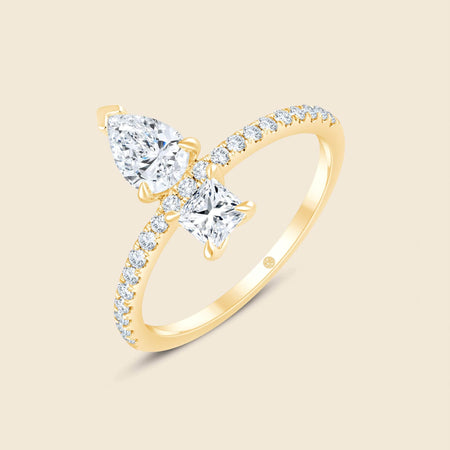

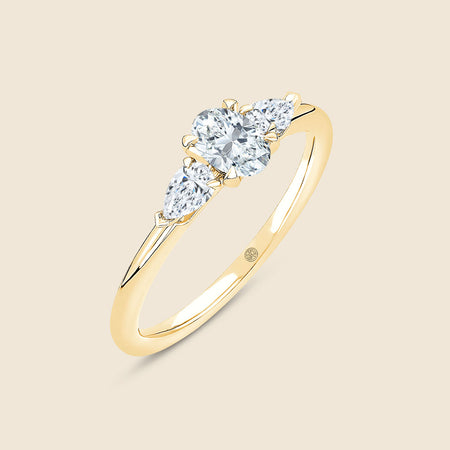
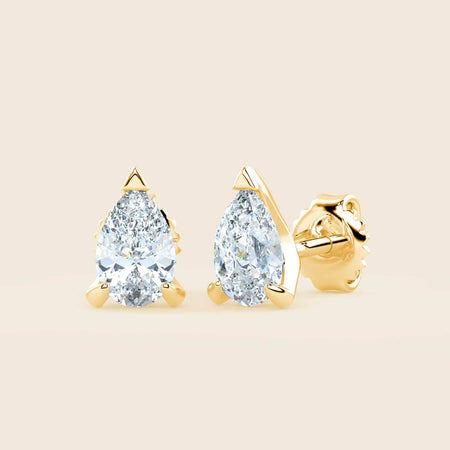
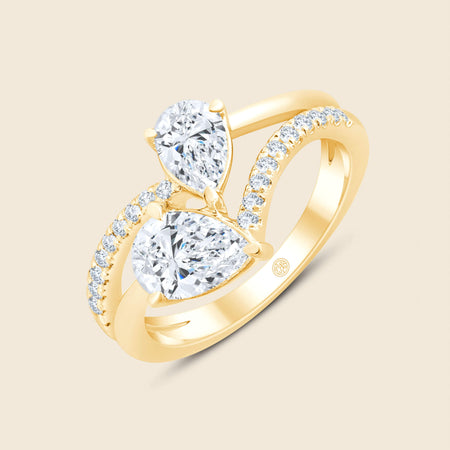

Nevertheless, there are also arguments that may speak against a purchase. The tip of the diamond is the most sensitive area and is susceptible to damage and chipping. This fragile tip must be protected by a suitable setting, ideally with V-shaped prongs that securely enclose the tip. Without appropriate protection, there is a risk that the tip may break off during daily wear.
Another disadvantage is that it can be difficult to find a well-cut pear-shaped diamond. Since gemological laboratories do not assign cut quality grades for fancy-shape diamonds such as the pear cut, you have to check the sparkle, symmetry and shape particularly carefully. One phenomenon that can occur with the pear cut as well as the oval and marquise cut is the bow-tie effect. This creates a dark, butterfly-shaped shadow in the middle of the stone if the light is not optimally reflected. The cut quality of a marquise diamond and also of the pear cut is decisive for the extent to which this effect occurs. As gemmological laboratories do not assign cut quality grades for the pear cut, the brilliance and symmetry of the stone must be checked particularly carefully. A well-cut pear-shaped diamond minimizes the bow-tie effect and ensures uniform sparkle over the entire surface.
Drop-shaped diamonds show the color of the diamond more than round brilliants, especially at the pointed edge. Therefore, a higher clarity in terms of color grade is recommended - at least color H or better to ensure that the stone appears white. With lower color grades, yellowish or brownish nuances can become visible, which detract from the overall effect. In addition, black inclusions or clearly visible dots in the center of the stone are visible to the naked eye, even with a pear cut, which is why the position of inclusions is particularly important. In combination with white gold or platinum, a color H or better is recommended, while with yellow gold or rose gold, even stones of color up to K can still appear colorless, as the metal reflects some of the natural color.
How is the trillion cut best accentuated in jewelry?

In addition to rings, the Trillion Cut is also ideal for pendants, especially if a sophisticated, modern look is desired. In combination with high-quality metals such as platinum or white gold, an elegant piece of jewelry is created.

Colored gemstones also benefit from the trillion cut: sapphires or other colored stones in the trilliant cut, for example, look particularly vibrant thanks to their triangular shape. Such a design emphasizes both the color and the depth of the stone.
An example: 1 ct lab diamond with trillion accent in the gold engagement ring shows how a small trillion stone is used as a side stone in an engagement ring. The sharp corners and precise cut enhance the play of light and make the ring particularly elegant and expressive.
Did you know?
Although the name was protected, the term trillion has established itself over time as a general term for all triangular brilliant cuts with three sides of equal length. Today, it is used to describe a whole family of triangular cuts, not just the original, protected shape.
Frequently asked questions
The trillion cut is a triangular diamond cut with usually 31-50 facets, which creates a modern, striking and very sparkling look.
It is often used as a side stone in engagement rings or as a central stone in modern, geometric designs.
Yes, the three tips are particularly susceptible to impact. A secure mount with protective claws or a half-frame mount is recommended.
The pointed side is more sensitive as it can be damaged more quickly. We therefore recommend a prong setting to protect the tip or a bezel setting for more security.
Yes, the brilliant facet style offers a lot of brilliance and fire, but it looks different from round or oval cuts - somewhat "flashier" and more angular.
Conclusion - the unique triangular cut
The trillion or trilliant cut is an exciting and modern option among diamond shapes, characterized by its triangular shape, sharp brilliance and intense fire. Thanks to 31 or 50 facets and meticulous precision, a trillion diamond can become a piece of jewelry with a strong personality, whether as a solitaire in a ring, a stylish side stone or an eye-catching pendant.
Historically rooted, this cut combines traditional craftsmanship with contemporary design. Its unique geometry and brilliance make it an ideal choice for anyone who wants a unique gemstone.
If you want a diamond that stands out from the crowd for its uniqueness, and are prepared to pay attention to cut quality and depth, then the Trillion Cut is a fantastic and stylish choice.