
The oval cut - timeless elegance of oval diamonds

The oval cut is one of the most timeless and elegant diamond shapes and is becoming increasingly popular, especially for engagement rings. This elongated shape combines the brilliance of the classic brilliant cut with an extraordinary, feminine silhouette. Due to their unique proportions, oval diamonds appear larger than round diamonds of the same weight and give the finger a slender, elongated appearance. Whether as a solitaire in a ring or as the main stone in an exclusive collection - the oval cut combines simplicity with spectacular brilliance and makes every piece of jewelry something special.
The most important facts at a glance
Characteristics of the oval cut - the oval diamond
What makes the oval cut the ideal diamond shape for engagement rings?
Learn more
History & origin of the oval stone for diamond rings
Find out how a Russian diamond cutter optimized and modernized the brilliant cut and which pre-forms of the oval cut already existed before that.
Learn more
Advantages and disadvantages of the oval-cut diamond ring
Find out if and why this cut could be suitable for you or your loved one.
Learn more
How is the oval cut best accentuated in jewelry?
Here we show you how versatile the oval cut can be and how it is best shown to advantage.
Learn more
Characteristics of the oval cut - the oval diamond
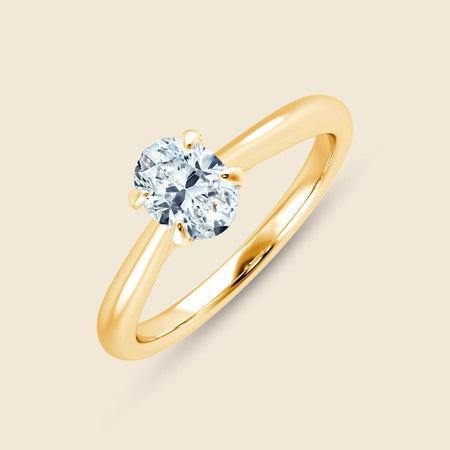
The oval cut is characterized by its elliptical, oval shape and is one of the modified brilliant cuts. As such, it incorporates key elements of the classic brilliant cut and typically consists of 58 facets - 32 on the crown and 24 on the pavilion. These facets optimally reflect the incident light and create an impressive brilliance that gives the oval-cut diamond its characteristic sparkle.
A key feature of the oval cut is its ideal length-to-width ratio, which is between 1.33 and 1.66. The optimum ratio is around 1.5, where the length of the stone is 1.5 times its width. This proportion ensures a harmonious, symmetrical appearance and prevents the stone from appearing too elongated or too bulbous. The elongated shape makes the diamond appear larger than round diamonds with the same carat weight - an effect that makes the oval cut particularly attractive for engagement rings.
One particular phenomenon to look out for with the oval cut is the so-called"bow-tie effect". This creates a dark, butterfly-shaped shadow in the middle of the stone if the light is not optimally reflected by the facets. This effect can be minimized through precise proportions and the correct depth of the pavilion, so that the stone shines evenly.
The many facets of the oval cut have the advantage that they can cleverly conceal smaller inclusions. Flaws that would be visible under tenfold magnification are concealed by the complex arrangement of facets, giving the stone a higher overall purity. However, inclusions in the center of the stone are more noticeable as the facets are larger there.





History & origin of the oval stone for diamond rings
Although oval diamonds were cut as early as the 18th and 19th centuries, the modern version of the oval cut is a comparatively recent development. The oval cut, as we know it today, was presented to the world on October 16, 1957 under the name "Oval Elegance" . The legendary Russian diamond cutter and jeweler Lazare Kaplan (1883-1986), who developed the perfect cut shape in the early 1960s, is considered the inventor.
Lazare Kaplan was inspired by a rough diamond with a natural oval shape. He realized that this shape would result in the least possible loss of material during cutting - a decisive economic advantage when processing valuable rough diamonds. Kaplan was already a jeweler's legend during his lifetime, not only because of the oval cut, but also because of his unique ability to split rough diamonds with a precise blow along the crystal fiber. This process, known as "cleaving", enabled him to transform stones that were considered worthless into beautifully cut diamonds.
However, oval diamonds already existed before Lazare Kaplan. One famous example is the legendary Koh-i-Noor diamond, a 186-carat white gemstone from Golkonda, India. Originally an Indian cut, it was reworked to an oval brilliant cut in 1852 to increase its brilliance. Other famous oval diamonds include the blue Wittelsbacher Graff with 31.06 carats and the pink diamond Pink Star (Steinmetz Pink) with an impressive 56.60 carats.
In the early centuries, cut diamonds were not differentiated according to their cut, but were simply referred to as"brilliants". It was only with the systematic development of gemology - the study of the processing and use of gemstones - that different cuts were precisely categorized. Today, the oval cut is one of the so-called "fancy cuts", a term that covers all cuts that do not correspond to the classic brilliant cut.

Advantages and disadvantages of the oval-cut diamond ring
The oval cut offers numerous advantages that make it a popular choice for diamond rings and jewelry. Its greatest advantage lies in its visual impact: due to its elongated shape, an oval-cut diamond appears larger than a round brilliant-cut diamond with the same carat weight. This makes it particularly attractive for anyone who wants an impressive piece of jewelry with maximum visual presence without having to spend the budget on a higher carat weight.
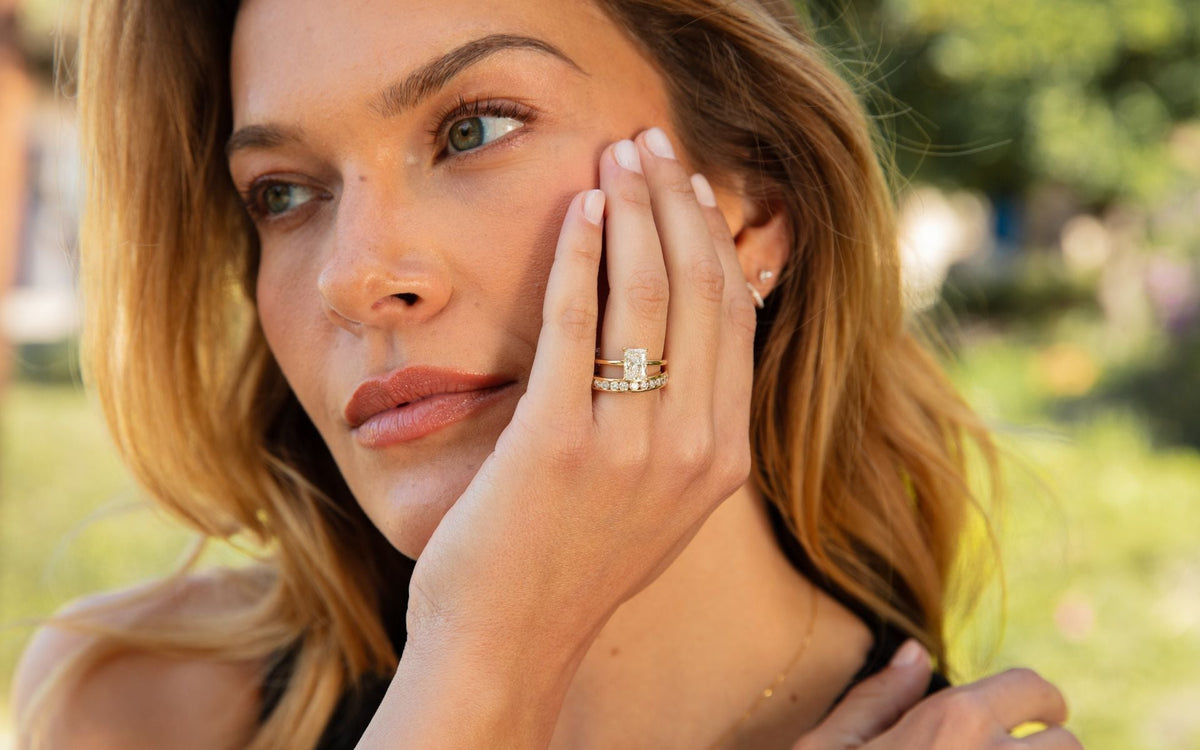
Another plus point is the elegance and simplicity of the design. The oval cut gives rings a feminine, timeless look and its elongated shape makes fingers appear slimmer and longer - an appreciated effect in engagement rings. In addition, the price of oval-cut diamonds is around 25 to 28 percent lower than that of brilliant-cut diamonds of the same weight, making them an economically attractive alternative.
The 58 facets ensure an impressive brilliance that is in no way inferior to that of the classic brilliant cut. Oval diamonds reflect the light intensely and create a sparkling interplay that makes every piece of jewelry an eye-catcher. In addition, the many facets can cleverly conceal minor inclusions and blemishes, giving the stone a higher perceived clarity.
Nevertheless, the oval cut also has some disadvantages. The aforementioned bow-tie effect can occur if the proportions are not perfectly aligned. This dark shadow in the center reduces the brilliance and should definitely be checked when purchasing. In addition, inclusions in the center of the stone are more noticeable due to the larger facets, which is why a high clarity is recommended. Experts recommend using oval-cut diamonds in stones of color grading D to H, as yellowish or bluish nuances can become more visible in this cut.
Another point is symmetry: the oval shape requires precise craftsmanship to ensure a balanced appearance. If the symmetry is not perfect, the stone can appear uneven or distorted.
Discover oval cuts from the Nami collection


The 58 facets ensure an impressive brilliance that is in no way inferior to that of the classic brilliant cut. Oval diamonds reflect the light intensely and create a sparkling interplay that makes every piece of jewelry an eye-catcher. In addition, the many facets can cleverly conceal minor inclusions and blemishes, giving the stone a higher perceived clarity.
Nevertheless, the oval cut also has some disadvantages. The aforementioned bow-tie effect can occur if the proportions are not perfectly aligned. This dark shadow in the center reduces the brilliance and should definitely be checked when purchasing. In addition, inclusions in the center of the stone are more noticeable due to the larger facets, which is why a high clarity is recommended. Experts recommend using oval-cut diamonds in stones of color grading D to H, as yellowish or bluish nuances can become more visible in this cut.
Another point is symmetry: the oval shape requires precise craftsmanship to ensure a balanced appearance. If the symmetry is not perfect, the stone can appear uneven or distorted.
How is the oval cut best accentuated in jewelry?

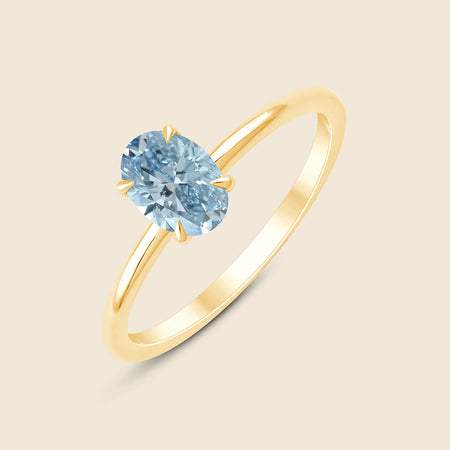
Oval diamonds also make excellent side stones. In combination with a round brilliant or another cut, they create elegant accents and give the ring additional depth. In some classic designs, the diamond sits raised on six prongs, which accentuate the elegance of the oval cut.

It is important that the setting respects the proportions of the stone and emphasizes the symmetry. A well-set oval diamond has a balanced effect and allows the shape of the diamond to come into its own without being distracted by too much metal or an unsuitable ring band.

Did you know?
Oval diamonds usually do not have a standardized proportion frame, unlike round brilliants. As a result, each oval cut has its very own character - from short and wide to long and narrow - which makes it one of the most individual diamond cuts of all.
Frequently asked questions
The oval cut is an elongated, brilliant cut, usually with 56-58 facets, which combines the brilliance of a round brilliant with an elegant, elongated shape.
It makes the diamond appear larger than its actual carat weight, creates strong brilliance and visually stretches the finger and hand.
Yes, the so-called bow-tie effect - a dark shadow in the center. A well-cut stone shows it only discreetly or barely visible.
Yes, it is very popular because it looks glamorous, sparkles a lot and is modern and timeless at the same time.
Proportions between 1.30:1 and 1.45:1 are popular, as they produce a harmonious, balanced shape.
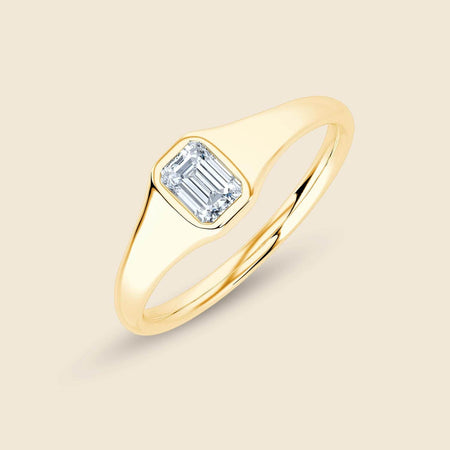
A prong setting or bezel setting protects the points and at the same time emphasizes the brilliance and elegant shape of the stone.


Conclusion: The elegant diamond for engagement rings
The oval cut is an exceptional choice for you if you want to combine timeless elegance with modern brilliance. Its elongated shape makes diamonds appear larger, gives the fingers a slender appearance and offers a fascinating alternative to the classic brilliant cut. With its 58 facets, the oval-cut diamond reflects the light intensely and creates a unique sparkle that makes every piece of jewelry - whether engagement ring, solitaire or part of an exclusive collection - a real eye-catcher.
If you want to opt for an oval-cut diamond, you should pay attention to good symmetry, the right length-to-width ratio and high clarity. With the right setting - whether prong, halo or bezel - the unique shape of the diamond is shown to its best advantage and emphasizes the natural elegance and simplicity of this timeless cut.
The oval cut is more than just a diamond shape - it is a statement for all those who value exceptional brilliance, timeless design and the perfect balance between tradition and modernity.
Featured collection
Bridal Bracelet