
The marquise cut (navette cut) - royal diamonds for engagement rings

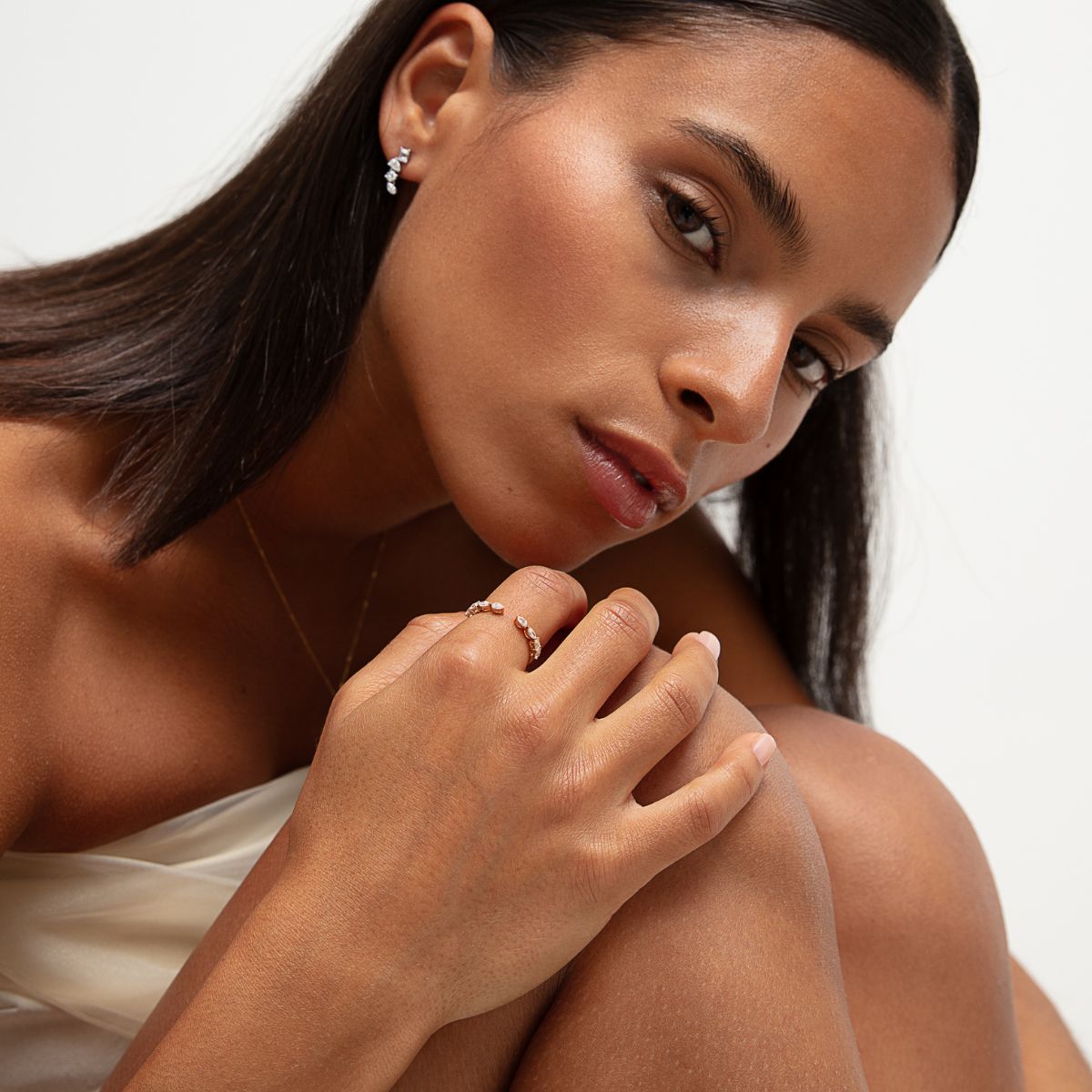
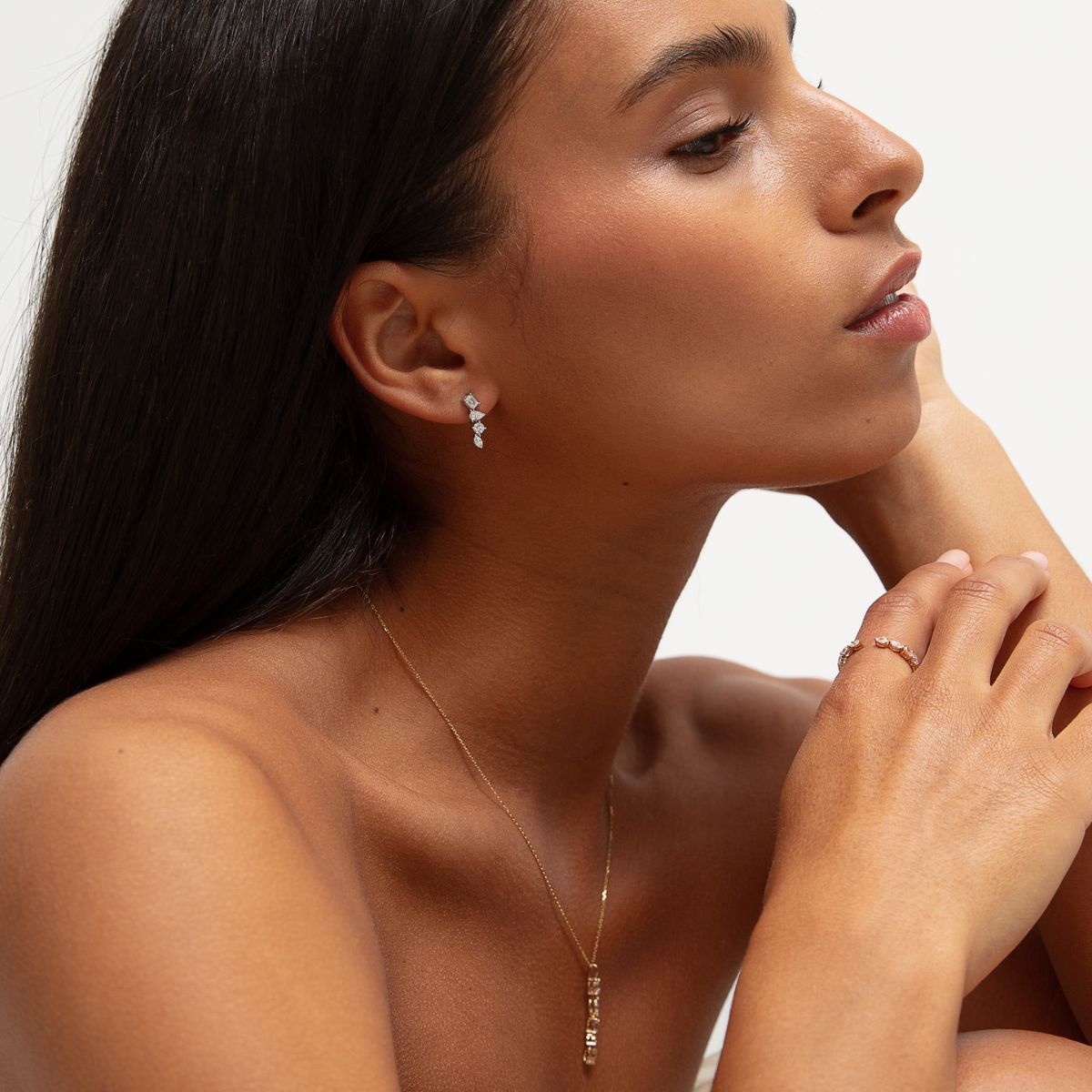
The marquise cut, also known as the navette cut, is one of the most romantic diamond shapes in the world of jewelry. Its elongated cut shape with its characteristic pointed ends combines royal tradition with timeless brilliance and makes every piece of jewelry an extraordinary highlight. Engagement rings or wedding rings in particular are currently experiencing an impressive revival with the marquise cut, as its unique shape makes the diamond appear larger than round diamonds with the same carat weight and gives the fingers a slender, elegant silhouette.
The marquise diamond is not only a visual eye-catcher, but also has a fascinating history dating back to the royal salons of the 18th century. Whether as a solitaire in a ring, in a glamorous halo setting or as part of high-quality diamond jewelry - the marquise cut radiates a unique elegance that sets it apart from other diamond shapes. Investing in an oval-shaped marquise-cut diamond means choosing a piece of jewelry that perfectly combines tradition, romance and modern sophistication.
The most important facts at a glance
The marquise diamond and how to recognize it
What makes the Marquise Schlifs so special and how can you recognize it?
Learn more
History & origin of the royal navette cut
Find out how a completely new diamond cut was created because of a love story.
Learn more
Advantages and disadvantages of marquise-cut diamond shapes
Find out if and why this cut could be suitable for you or your loved one.
Learn more
How is the marquise cut best accentuated in jewelry?
Here we show you how the marquise cut can be used in a variety of ways and how it is best shown to advantage.
Learn more
The marquise diamond and how to recognize it
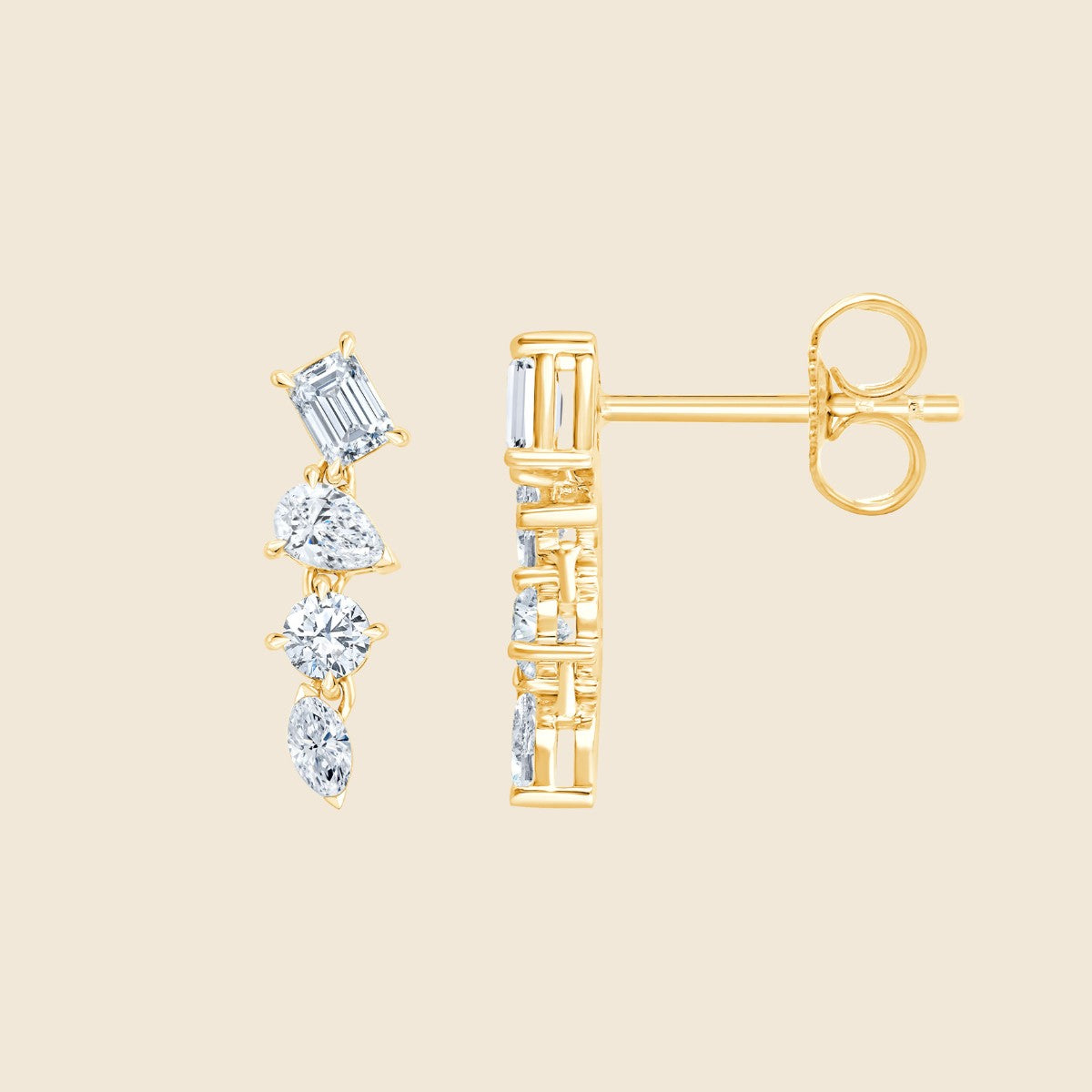
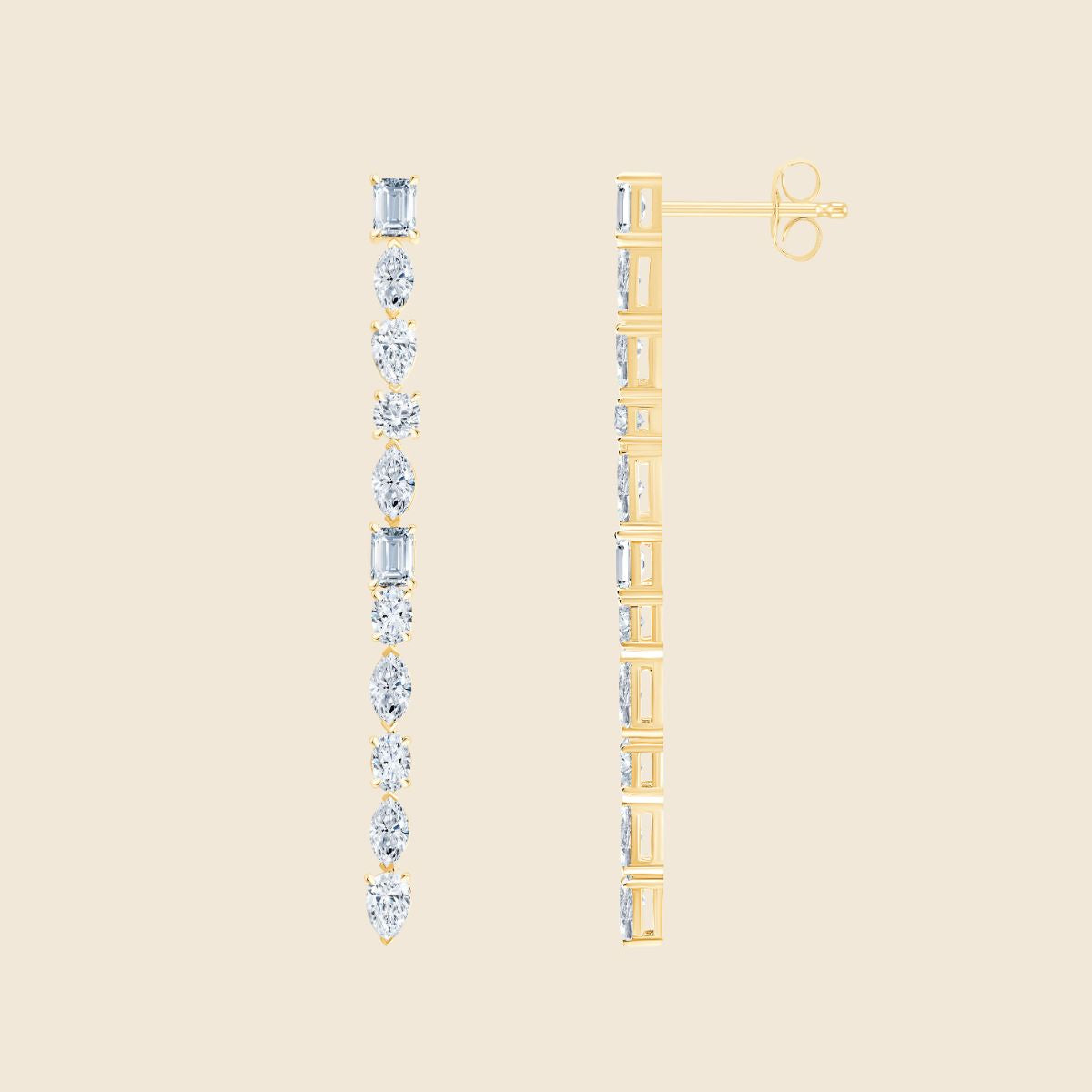
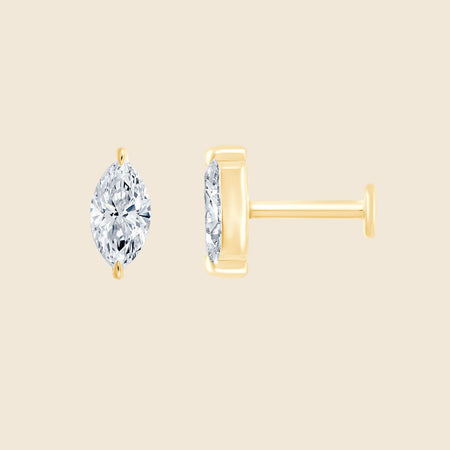
The marquise cut is characterized by its elongated, elliptical shape with two distinctive pointed ends, which give it its unmistakable appearance. This cut shape is often described as "boat-shaped" or "eye-shaped" and belongs to the so-called fancy cuts - i.e. all diamond shapes that deviate from the classic round brilliant. A marquise diamond typically consists of 56 to 58 expertly placed facets that optimally reflect the light and ensure impressive brilliance.
A key feature of the marquise cut is its ideal length-to-width ratio, which should be between 1.75 and 2.25. Most people prefer a ratio of around 1.7 to 2.2, as this gives the stone a harmonious, balanced proportion. If the ratio is too low, the diamond can appear squat and "chubby", while very high ratios can impair the brilliance. The elongated shape of the marquise cut has the great advantage that it optically enlarges the stone - a marquise diamond actually appears around 15 percent larger than a round diamond with the same carat weight. This optical illusion makes the marquise cut particularly attractive for anyone who wants maximum visual presence without having to spend the budget on a higher carat weight.




History & origin of the royal navette cut
The story of the Marquise Schliff is closely interwoven with royal romance and French court culture. Legend has it that it all began at a sumptuous masked ball at the Palace of Versailles, where King Louis XV (1710-1774) met the charming Jean Antoinette Poisson. The king, whose grandfather went down in history as the Sun King, was so enraptured by her that he made her his main mistress and gave her the title Marquise de Pompadour. Louis XV is said to have declared that her lips were the most perfect he had ever seen. To immortalize this beauty, the king commissioned a royal jeweller to create a diamond shape that resembled the sensual lips of the Marquise de Pompadour - this is how the marquise cut, also known as the navette cut, was created.
This romantic origin still lends the marquise diamond a special symbolism today. The shape stands for sensuality, royal elegance and the combination of nature and luxury. Diamonds were already being cut in various shapes in the 18th century, but the precise cut of the marquise, as we know it today, only developed over time. With increasing knowledge of light output and facet arrangement, diamond cutters perfected the marquise cut so that today, with its 56 to 58 facets, it produces an impressive brilliance that is in no way inferior to the round brilliant.
The marquise cut was known in royal circles for centuries and was mainly used in exclusive pieces of jewelry for the European aristocracy. In the late 1960s and early 1970s, the shape experienced a boom and filtered through from the luxury segment to the mainstream. The marquise cut became so popular in engagement rings in particular that it was at times considered "my mother's diamond", which initially put off younger buyers. However, modern buyers have taken a fresh look at this timeless stone and the marquise cut is currently experiencing an impressive revival. Celebrities such as Victoria Beckham, Catherine Zeta-Jones, Ashlee Simpson and Selena Gomez are wearing stunning engagement rings with marquise diamonds, which has brought the shape back into the spotlight.
The origin of diamonds is playing an increasingly important role today, and many jewelers place great importance on ethically sound sources. Diamond certificates from renowned laboratories such as GIA, HRD or IGI not only guarantee diamond quality, but also that the stones come from legal sources that do not contribute to the financing of conflicts. Particularly in cities such as Antwerp, the traditional center of the diamond trade, great importance is attached to transparency and the origin of diamonds.

The marquise cut was known in royal circles for centuries and was mainly used in exclusive pieces of jewelry for the European aristocracy. In the late 1960s and early 1970s, the shape experienced a boom and filtered through from the luxury segment to the mainstream. The marquise cut became so popular in engagement rings in particular that it was at times considered "my mother's diamond", which initially put off younger buyers. However, modern buyers have taken a fresh look at this timeless stone and the marquise cut is currently experiencing an impressive revival. Celebrities such as Victoria Beckham, Catherine Zeta-Jones, Ashlee Simpson and Selena Gomez are wearing stunning engagement rings with marquise diamonds, which has brought the shape back into the spotlight.
The origin of diamonds is playing an increasingly important role today, and many jewelers place great importance on ethically sound sources. Diamond certificates from renowned laboratories such as GIA, HRD or IGI not only guarantee diamond quality, but also that the stones come from legal sources that do not contribute to the financing of conflicts. Particularly in cities such as Antwerp, the traditional center of the diamond trade, great importance is attached to transparency and the origin of diamonds.

Advantages and disadvantages of marquise-cut diamond shapes
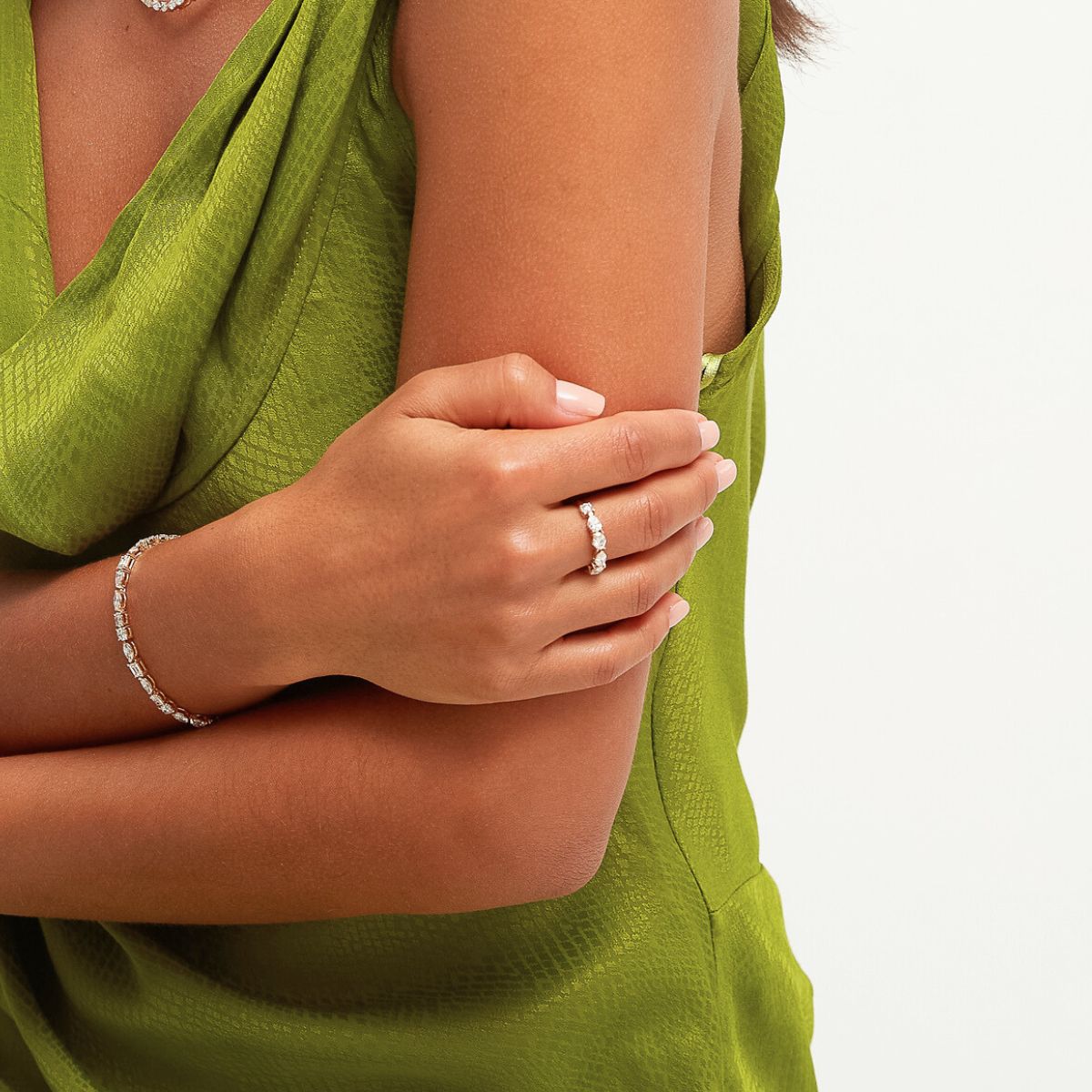
The marquise cut is an attractive choice for high-quality diamond jewelry. Its biggest advantage lies in its visual impact: due to its elongated shape and pointed ends, a marquise diamond appears larger than a round diamond of the same carat weight - in fact, about 15 percent larger in face-up surface area. This makes it particularly attractive for those who want an impressive piece of jewelry with maximum visual presence without having to spend the budget on a higher carat weight. The elongated shape also elongates the finger and makes the hand appear slimmer and more elegant - an appreciated effect for engagement rings and wedding bands.
Another advantage is the unique brilliance of the marquise cut. With its 56 to 58 facets, the stone reflects the light intensively and creates a sparkling interplay that is in no way inferior to the classic round brilliant. The shape also looks unusual and eye-catching, making it the perfect choice for anyone looking for a statement piece of jewelry. The royal origin of the marquise cut also gives it a romantic and historical significance that sets it apart from other diamond shapes.
The marquise cut is also attractively priced: diamonds in this shape are generally less expensive than round brilliant-cut diamonds of the same carat weight, as the elongated shape means less material is lost during cutting. This makes the marquise cut an economically smart choice for anyone who values size and brilliance without breaking the bank. The marquise cut can also be combined in a variety of ways.


Nevertheless, the marquise cut also has some disadvantages that should be taken into account when purchasing. The pointed ends are fragile and susceptible to chipping, which is why they need to be secured with a protective setting - ideally with V-shaped prongs. Another phenomenon to watch out for with marquise cuts is the so-called bow-tie effect. This creates a dark, butterfly-shaped shadow across the center of the stone if the light is not optimally reflected by the facets. Every marquise diamond exhibits this effect to some extent, but it is barely visible in well-proportioned stones. The cut quality of a marquise is therefore crucial - precise symmetry and balanced proportions minimize the bow-tie effect and maximize brilliance. It is therefore important to check the cut quality of a marquise carefully and only choose stones with good to excellent proportions.
Symmetry also plays a decisive role: the elongated shape of the marquise cut makes asymmetries particularly noticeable. An asymmetrical stone can appear uneven or distorted, which is why a precise finish is crucial. In addition, the marquise cut shows color nuances more strongly than round diamonds, especially at the pointed ends.
The shape of the diamond also requires special attention when assessing clarity. While the many facets can conceal smaller inclusions, impurities near the sides are less noticeable than those in the center of the stone. Experts recommend looking for a clarity between IF and SI2 in marquise diamonds, although eye-clean SI1 diamonds can be a good choice as long as the inclusions are not in the center. The marquise cut also has special color characteristics: The pointed ends tend to accentuate color nuances more than the middle of the stone. It is therefore recommended to choose a color grade of H or better for platinum or white gold settings, while in yellow or rose gold, even a K-colored diamond can still appear colorless, as the metal reflects some of the color
How is the marquise cut best accentuated in jewelry?

Another glamorous option is the halo setting, in which a ring of smaller diamonds frames the marquise cut. This arrangement enhances the brilliance of the main stone and makes it appear even more impressive - a design that Catherine Zeta-Jones demonstrates perfectly with her 10-carat marquise ring with halo and pavé setting. If you prefer a classic and timeless look, choose a solitaire ring in which the marquise diamond takes center stage and its extraordinary shape is shown to its full advantage. Vintage-inspired designs with milgrain embellishments, engravings or side accent stones emphasize the historical charm of the marquise cut and give the ring a romantic touch.

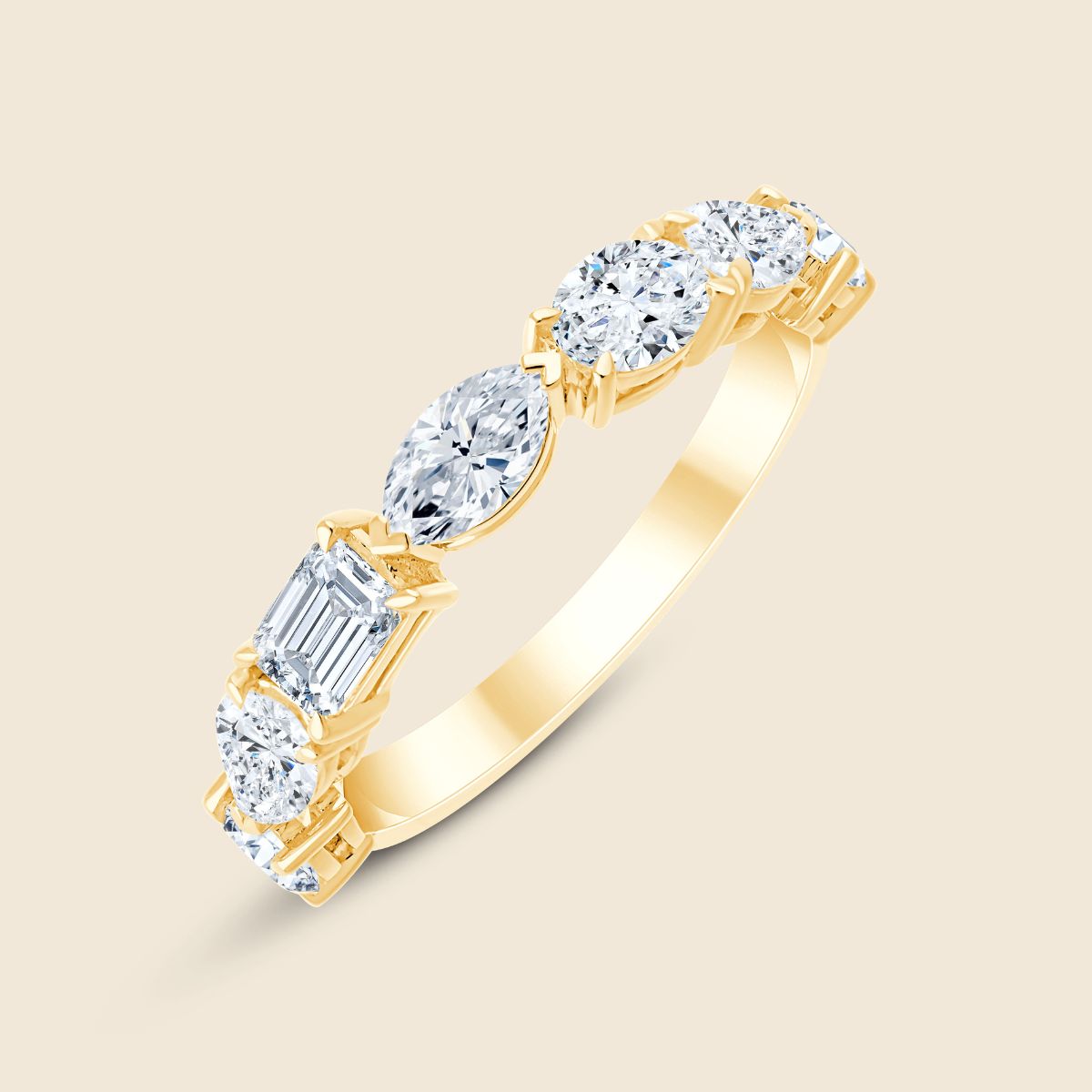
When choosing the metal, the marquise cut harmonizes with platinum as well as white gold, yellow gold or rose gold. Platinum and white gold give the ring a timeless, elegant look and allow the brilliance of the diamond to shine unadulterated. Yellow gold underlines a warm, vintage-inspired style and gives the piece of jewelry a classic touch, while rose gold adds a romantic, modern touch. The marquise cut is also increasingly being used in wedding rings and eternity rings. In these designs, several marquise diamonds are arranged in a row, creating a continuous, elegant effect and emphasizing the elongated shape.

Did you know?
Due to its tapered ends, the marquise cut has the greatest "face-to-carat" effect of all diamond cuts - this means that it often appears significantly larger than its actual carat weight would suggest.
Frequently asked questions
The marquise cut - also known as the navette - is an elongated, tapered diamond cut with 56-58 facets that is known for its elegant, boat-like shape.
Due to its elongated silhouette, the diamond appears larger than its actual carat weight and makes fingers appear narrower and longer.
Ensure perfect symmetry, evenly shaped tips and as discreet a bow-tie effect as possible. Chipped tips should be protected by a good claw setting.
The two tips are considered to be more susceptible to knocks, which is why a stable frame with protective claws is usually recommended.
Yes, it is an excellent choice for anyone looking for an eye-catching, romantic-classic look and who prefers a particularly elegant, stretching design.
Prong settings on the tips or bezel settings are ideal for protecting the delicate ends and emphasizing the brilliance.
Conclusion: The elegant marquise cut for your piece of jewelry
The marquise cut is an exceptional choice for anyone who wants to combine regal elegance with modern brilliance. Its elongated shape with the characteristic pointed ends makes diamonds appear larger, gives the fingers a slender silhouette and offers a fascinating alternative to round brilliants. With its 56 to 58 facets, the marquise diamond reflects the light intensely and creates a unique sparkle that makes every piece of jewelry - whether engagement ring, solitaire, halo design or part of an exclusive collection - a real eye-catcher.
If you opt for a marquise-cut diamond, you should look for good symmetry, the right length-to-width ratio between 1.75 and 2.25 and a high clarity. The cut quality of a marquise is crucial to minimize the bow-tie effect and maximize brilliance. With the right setting - whether V-cut to protect the pointed ends, halo for added glamor or East-West for a modern look - the unique shape of the diamond is shown to its best advantage and emphasizes the natural elegance and romance of this timeless cut.
The marquise cut is for anyone who values exceptional brilliance, royal tradition and the perfect balance between historical charm and timeless modernity. Whether as an investment in diamonds, as the centerpiece of an engagement ring or as a special piece of jewelry for special occasions - the marquise cut combines everything that characterizes high-quality diamond jewelry: Elegance, brilliance and a fascinating story that makes it unique.
Featured collection
Luxe